THE UNLIKELY ASSIGNMENT
As absurd as the title of this article sounds today, it sounded equally absurd to me when I initially heard it during my very first architectural design studio in the first year of my Bachelor of Architecture. We had just been introduced to our maiden assignment that involved the study of Mumbai’s historic D.N. Road during which one of the seven faculty members, with the solemnity of a prophet, declared: “Go. Observe the ‘bus stop’ !”
OBEYING THE PROPHET
And so, like obedient (and slightly confused) architecture students, observe we did. Armed with sketchbooks, measuring tapes, DSLR cameras, and more enthusiasm than understanding, we set out to decode what we had always dismissed as background infrastructure. We approached the bus stop with the seriousness of archaeologists at a dig site, trying to find meaning in every bolt and bench.
We began with the basics: dimensions. Height, width, depth. How many people could stand inside? Could someone sit without their knees knocking into the metal grill? We jotted it all down. Then came the materials—steel frame, corrugated metal roofing, maybe some aluminum cladding, plastic seating, concrete base. Noted. The lighting? Inconsistent. One bulb was flickering, the other dead. Noted.
We traced bus routes, charted the arrival frequency, identified peak and off-peak times. We even stood at a distance to watch how commuters approached the stop—whether they slowed down, waited, or simply darted in last-minute as the bus arrived. We mapped its location in relation to nearby shops, footpaths, trees, electric poles, and even stray dogs.
It was a full-blown architectural investigation—on paper.
And yet, for all the effort, all the measuring, mapping, photographing, and pretending to look intelligent while squatting on a footpath with a scale and sketchpad—we left the site none the wiser. Our sheets were full, our observations thorough, but the question hung stubbornly in the air: What were we really meant to see?
We had documented the bus stop, yes—but had we truly observed it?
That first assignment ended with a presentation full of diagrams and data, delivered in earnest. But deep down, we knew we hadn’t cracked it. Not yet. It would take more than a tape measure and a checklist to understand what the prophet-faculty had really meant.
A PAUSE IN THE HILLS
That is, until much later, on the tourist-cluttered streets of Shimla, when I found myself pausing at another bus stop. It was an unplanned pause—the kind that happens when you’re caught between sightseeing and daydreaming, the way only hill towns can lull you into. The air was crisp, laced with the smell of pine and roasted peanuts. Tourists wandered past in puffer jackets, taking selfies against colonial façades, while locals moved more quietly, like they belonged to a slower clock.
I was standing across from a modest bus stop, tucked along a bend in the road. And then, out of nowhere, that long-forgotten phrase came echoing back: “Go. Observe the ‘bus stop’!”
Except this time, I didn’t reach for a tape measure. I didn’t take out my sketchbook. I simply stood and watched.
And suddenly, it clicked.
This was what we had missed back then—not the structure, but the situation. Not the materials, but the moment. The bus stop wasn’t just a node of transport; it was a soft pocket of time and community. A place where life briefly slowed down, and in that pause, revealed something intimate about the people who passed through it. It made me wonder: if this one bus stop could say so much about its setting, what had I missed in the others? What else was hiding in plain sight?
MEMORY, REVISITED
As the words continued to echo—now with an air of quiet revelation—I found myself revisiting memories of other bus stops I had encountered: one in Dehradun, another in Shimla, another in Mumbai and yet another in Ahmedabad. Each resurfaced not as a structure defined by steel, signage, or seating, but as a vivid scene—fragments of lived experience I hadn’t paid attention to before. These weren’t just places where people waited for buses; they were social microcosms, capturing the rhythm of their cities.
THE ARCHITECTURE OF EVERYDAY LIFE
Though these bus stops served the same practical function, the way they held space for people—the types of conversations they hosted, the duration of pauses they allowed, the rhythms they reflected—differed dramatically. Observing them not only revealed the architecture of the stops, but the architecture of everyday life in each place. These subtle contrasts became windows into the local culture, habits, and collective temperament of the people who used them.
PAUSES IN THE DOON VALLEY: WHERE LANDSCAPE SHAPES THE WAIT
Scattered across the Doon Valley, the bus stops here are more than mere points of transit-they are quiet interludes in the flow of daily life. Each one tells its own story, shaped by the character of its surroundings and the rhythms of the people who pass through. In a landscape where the urban often blends seamlessly with the rural, these modest structures become moments of pause that reveal the Valley’s layered identity and remind us that waiting need not always be impatient; in the right setting, it can be a chance to belong, if only for a little while, to the landscape itself.
A FOREST RETREAT DISGUISED AS BUS-STOP
The most striking example of a bus stop I have ever encountered is a finely crafted wooden pavilion within the lush expanse of the Forest Research Institute, Dehradun (Refer Fig. 01 and Fig. 02). Far removed from the image of a typical urban bus shelter, this structure sits quietly within a glade, embraced by towering canopies that filter the Himalayan sunlight into a soft, shifting mosaic. At first glance, it feels less like public transport infrastructure and more like an architectural retreat-a moment of calm carved into the landscape.
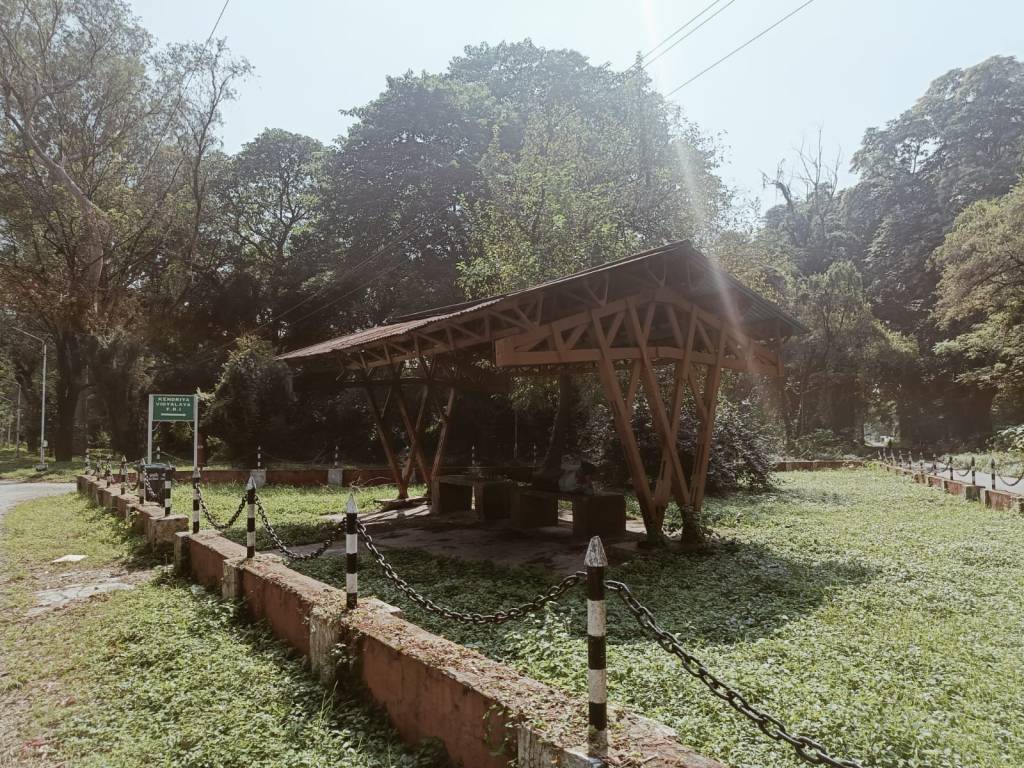
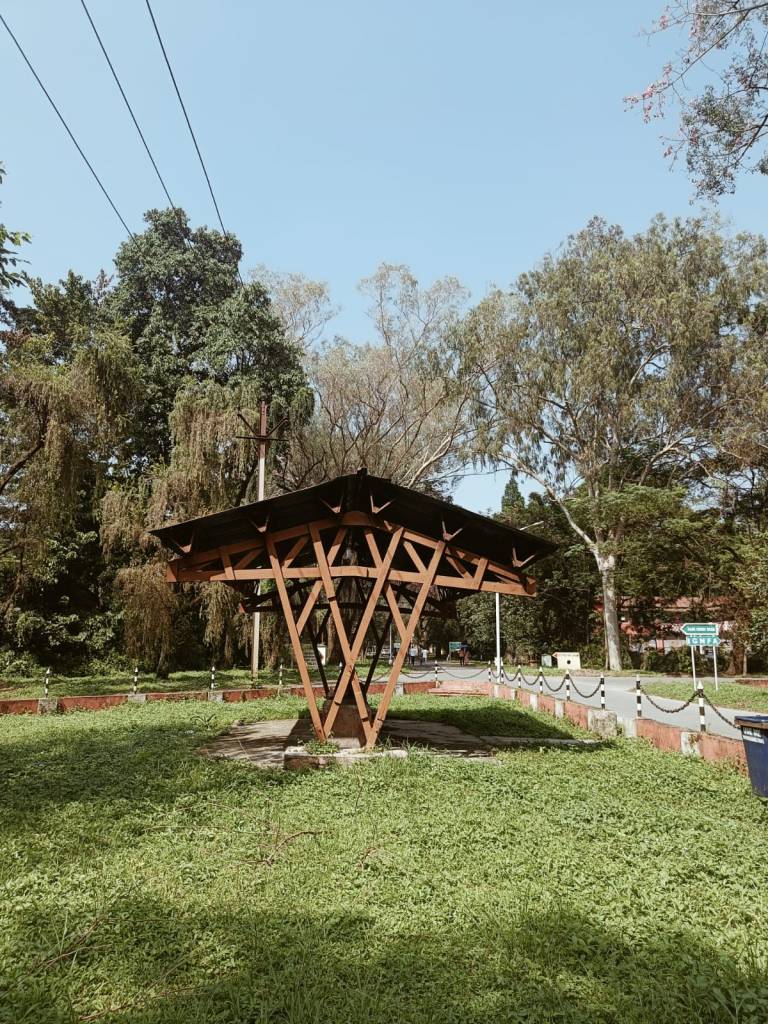
Its pitched roof, articulated with a rhythmic lattice of intersecting timber trusses, reflects both craftsmanship and structural clarity, evoking the architectural language of vernacular mountain shelters that are designed for protection against the harsh weather conditions while subtly echoing the research ethos of the Institute. The wooden frame, blends seamlessly with the earthy greens and browns of its surroundings, as though it had grown there organically rather than been built.
Beneath the shelter, sturdy benches offer more than just a place to sit — they become invitations to pause, reflect, and engage with the environment. Unlike the metallic or plastic benches of metropolitan bus stops, which often serve as transient perches in a landscape of haste, these benches encourage stillness. Here, waiting transforms into a sensory encounter. The rustle of leaves overhead forms a natural canopy of sound, occasionally interrupted by the flutter of wings or the soft thud of a fruit dropping to the forest floor. Shafts of sunlight, filtered through the intricate weave of branches, drift lazily across the ground, tracing patterns that change with every passing minute. The air carries the earthy fragrance of damp soil, mingled with the faint scent of resin from the timber trusses above. In the distance, a bird’s call rises and fades, as if marking time not by the clock but by the rhythms of the forest.
The space itself participates in this unhurried pace — open yet sheltered, designed not to demand movement but to allow for lingering. It holds you in a gentle suspension between departure and arrival, reminding you that in some places, waiting is not an inconvenience but a gift.
What makes this bus stop remarkable is its integration into the broader ecological and cultural context of Forest Research Institute. It is not an isolated utility, but part of a living environment where design is subservient to place. It teaches, without speaking, the value of restraint in design-that public amenities can be functional yet beautiful, minimal yet rich in character. In this way, the shelter becomes more than a point of transit; it is a lesson in how built form can harmonise with the rhythms of nature, turning the simple act of waiting into a restorative interlude.
A SPACIOUS REFUGE BY THE RIVER SON
Another bus stop that caught my attention while hiking along the banks of R. Son slithering parallel to the Maldevta Road is indicated in Fig. 03. This bus stops feels almost extravagant in space — as roomy as a Studio apartment in the crowded city of Mumbai. I found it tucked under the generous shade of old roadside trees, a quiet refuge from the hum of passing traffic. Its design is unpretentious: slender steel posts holding up a pitched corrugated roof, with a delicate strip of latticework along the edge that adds just enough character to make you look twice. Low metal railings trace its outline, suggesting boundaries without making it feel closed off.
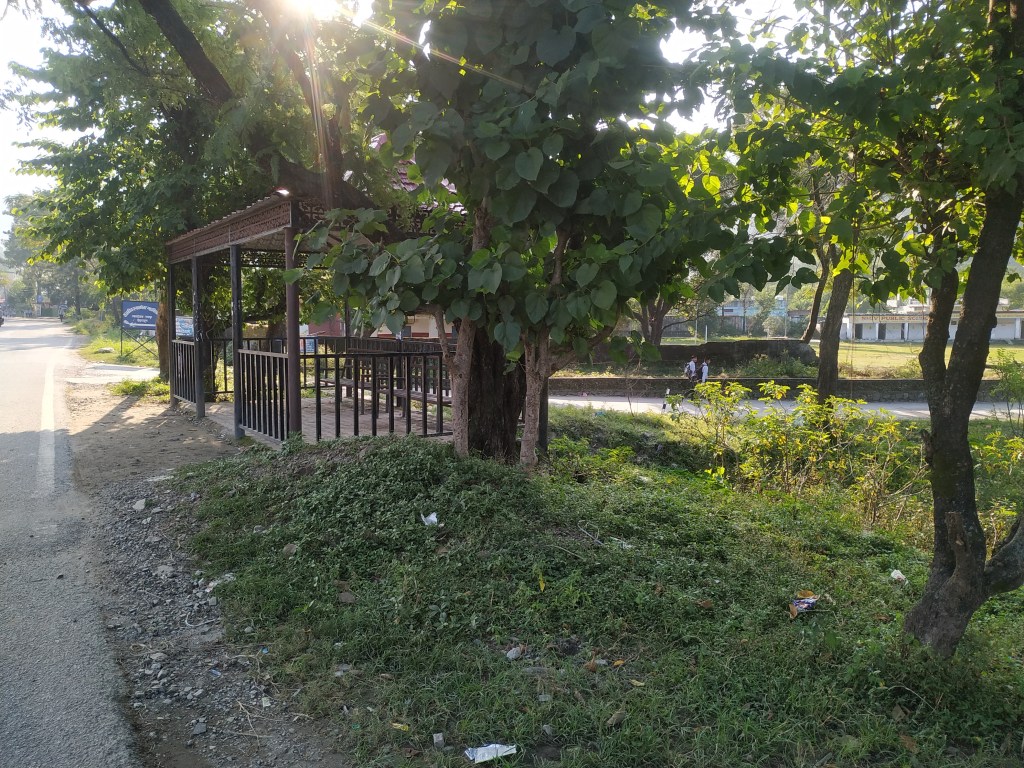
The broad leaves of a large tree growing right beside the shelter spill over the roof, merging the built form into the natural canopy. The interplay of sunlight filtering through the foliage creates shifting patterns across the shelter floor, softening the edges of the otherwise urban infrastructure. The bus stop provides ample space for passengers to sit and wait for buses that often arrive after considerable intervals. This breathing room transforms waiting from an impatient pause into a moment of ease. The provision of a small newspaper stand within the shelter offers another quiet occupation-the simple pleasure of leafing through a daily paper while the world passes slowly outside.
Set along a gently curving road bordered by greenery, this stop feels like a threshold between the semi-urban edge and a calmer, more natural setting. It’s a reminder that even basic transport infrastructure can be rooted-literally and visually in the landscape it serves, offering both utility and moments of unhurried reflection.
‘WAITING’ AS A CRAFT OF PLACE MAKING:
In these two instance of bus stops from Dehradun, waiting is no longer a passive act but a spatial experience shaped by architecture, setting, and the generosity of design. Whether nestled deep within a forested campus or resting by the banks of a slow meandering river, these bus stops stand as small but telling gestures of place-making. They suggest that public infrastructure, however modest, can carry an emotional and sensory dimension-that a simple shelter, if thoughtfully made, can connect us to our surroundings and even to ourselves. And perhaps, in a world so attuned to speed, that is reason enough to slow down and miss a bus or two.
PAUSES IN THE QUEEN OF HILLS: WHERE CULTURE SHAPES THE WAIT
Another strikingly different example lies in Shimla, encountered during a slow wander along the Mall Road. Here, a bus stop is far more than a waypoint; it is a quiet expression of the region’s identity and ethos. Modest in scale yet rich in character, these structures carry the warmth of local craftsmanship and the dignity of vernacular design. Sloping roofs echo the pitched silhouettes of hill houses, shielding passengers from rain and mist while blending seamlessly with the surrounding ridgelines. Wooden posts, sometimes carved with simple motifs, speak of traditional carpentry passed down through generations.
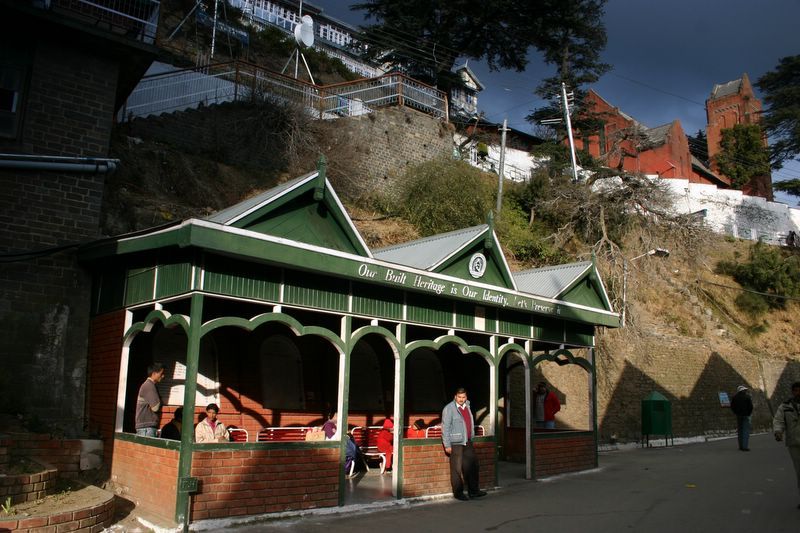
Beside one such structure stood an unusual sight-a giant piggy bank, not for coins but for kindness, where locals quietly deposited their old clothes. At first, it seemed almost whimsical, like a child’s oversized toy left in the wrong place. But linger a moment, and it began to speak; not in words, but in the quiet language of values. This was ‘Pahadi’ culture made visible: a way of life where nothing is wasted, and everything is given a second life.
In these hills, resources are not just used; they are cherished. A frayed shawl warms another winter, an empty tin becomes a planter, a broken chair finds new legs. Waste is not an afterthought but a responsibility — for here, there are no invisible pipes to carry it away. Water flows in trickles despite the Himalayan rivers’ abundance, and sewerage lines are scarce. Refuse must be shouldered, often by human or mule, down winding slopes to the foothills. Every discarded object, then, is a physical weight — a burden best avoided.
And so the bus stop, with its sloping roof and hand-carved posts, stands not merely as a shelter from rain and mist but as a symbol of the ‘Pahadi’ ethos. It holds the patience of the hills, the thrift of generations, and the humility of design that neither shouts nor boasts. In the Queen of Hills, a bus stop is not just a pause along the road rather it is a quiet altar to sustainability, a small but steadfast echo of the mountains’ enduring wisdom.
PAUSES IN THE CITY OF FORTUNE: WHERE GROWTH SHAPES THE WAIT
Another notable example of a bus stop comes from my beloved city — Mumbai. In stark contrast to the grandeur, modesty, and languid calm of the hills, Mumbai’s bus stops are stripped to bare essentials: compact, utilitarian, and pressed tightly against the cramped edge of a footpath. Devoid of the craftsmanship that graces their hill counterparts, these structures are stainless-steel frames, every inch plastered with advertisements thereby monetising each surface. The notion of calm, unhurried seating gives way to transient perches — a brief balance on an eight-inch-wide ledge before the next surge forward.
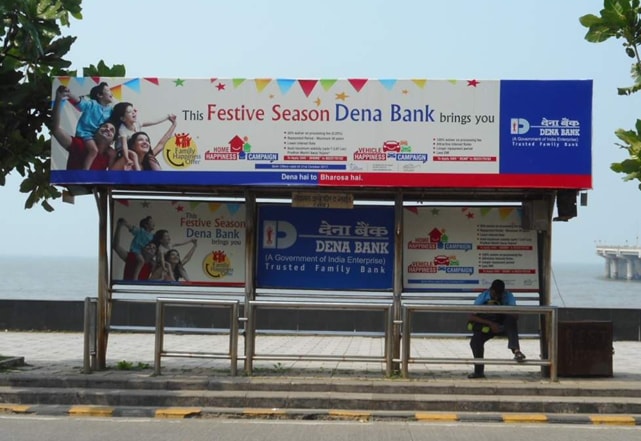

This minimalism is not neglect, but necessity, dictated by the sheer frequency of buses that keep the city’s vast population in perpetual motion. Here, waiting is not a lingering act but a rapid negotiation of space and timing. Commuters move with a silent choreography: eyes flick to route numbers in an instant, bodies angle instinctively toward the bus’s expected halt, feet inch forward the moment headlights cut through traffic. Briefcases and tiffins are juggled with the same precision as elbows and umbrellas in the monsoon crowd.
Here, there is no idle pause unless necessity forced it. Conversation is rare, glances fleeting, every gesture economised. The bus stop is not a social space but a transactional node — a brief exchange of bodies between the pavement and the bus floor. The atmosphere is electric with the hum of engines, the clang of coins, and the impatient hiss of air brakes. Even the architecture seemed to reflect this urgency: narrow, functional, stripped of embellishment, designed for throughput rather than comfort.
In Mumbai, the bus stop is not a pause in the journey; it is part of the city’s larger choreography of movement — disciplined, efficient, and unyielding. It embodies the spirit of a place where growth is measured in speed and where time is the most precious currency.
PAUSES IN THE CITY OF POLS: WHERE ASPIRATION SHAPES THE WAIT
Ahmedabad, a city of contrasts, holds its layers in plain sight. In the labyrinthine lanes of the old city, the pols breathe with the rhythm of centuries through carved wooden facades, narrow streets, and deeply rooted community life. But cross the Sabarmati, and a new Ahmedabad stretches outward in glass, steel, and wide arterial roads. Between them runs a spine of transformation: the Bus Rapid Transit System (BRTS) – a network that has become more than a mode of transport – it is a visible emblem of the city’s aspiration to present itself as a global urban player.
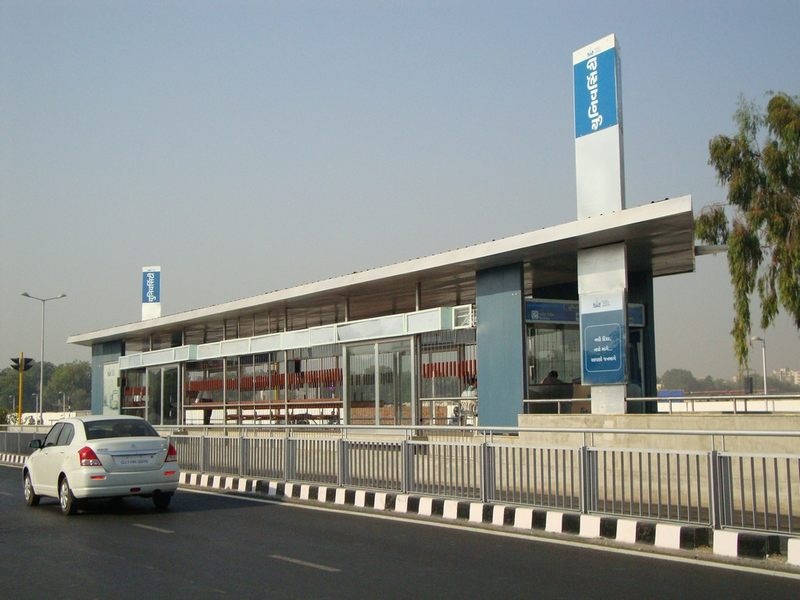
The BRTS bus stops speak this ambition fluently. Sleek steel structures with transparent glass enclosures, clear signage, automated ticketing, and designated docking bays mirror the design vocabulary of advanced transit systems in far-off cities. They are efficient, disciplined, and aspirational — a departure from the informal chaos of traditional bus halts. In their very form, they signal that Ahmedabad no longer measures itself only against other Indian cities, but against a league of global urban centres.
Here, waiting is infused with this aspiration. The stops gather a cross-section of the city’s evolving identity: heritage artisans carrying goods for sale, young entrepreneurs with start-up dreams, schoolchildren in crisp uniforms fluent in English and Gujarati alike. The pause on the BRTS platform is not idle rather it is poised, expectant, charged with the sense that the next bus is also the next step forward, part of a larger journey toward becoming a metropolis that blends its UNESCO heritage status with economic modernity.
In many ways, the BRTS stop is a threshold-a liminal space where the city’s two identities meet. Step in from the chaos of an old market lane, and you are inside a controlled environment of ticket validators, schedule boards, and structured queues. Step out, and you are back among centuries-old façades, cow bells, and the scent of roasting peanuts. It is here that the city’s aspiration is most visible-the desire to stand among the world’s global cities while remaining anchored to its past.
This threshold embodies Ahmedabad’s self-image in the 21st century: rooted in its UNESCO-listed heritage, yet leaning forward into the language of global infrastructure. The BRTS stop becomes a physical metaphor for the city’s aspiration — a place that connects not just neighbourhoods, but eras. Each bus arrival is a reminder that movement here is not simply about transport, but about transition — from local to global, from inherited rhythms to accelerated tempos, from history to possibility.
In this sense, the pause at the bus stop mirrors Ahmedabad’s own pause on the world stage: brief, intentional, and brimming with anticipation for the journey ahead.
CONCLUSION
In design school, we are often trained to look for the extraordinary—to admire iconic buildings, masterplans, and bold gestures. But what that first assignment gently, almost cryptically, asked of us was something far subtler: to observe not just form, but life. To study how people move through spaces, how they pause, how they negotiate the everyday.
The humble bus stop—unassuming, overlooked, and endlessly ordinary—became a window into a city’s soul. It taught me that design isn’t always loud. Sometimes, it is quiet. Sometimes, it sits on the edge of a busy road, rusting slightly, as people come and go—bearing witness to the tempo of a place, and the temperament of its people.
That single sentence: “Go. Observe the ‘bus stop’!” stayed with me far longer than any lecture or critique. It followed me across cities and years, revealing its wisdom slowly, one stop at a time.
In hindsight, it was never really about the bus stop. It was about learning to see.
 Terrain Tapestry
Leave a comment