Landscape design for a space is defined by the user of the space. Until the late 18th Century most often the user of landscaped spaces were royals and aristocrats. However, by the early 20th Century cities began experiencing the brunt of rapid urbanization catalyzed by industrialization. Rapid urbanization led to disparity in population distribution with some areas being more densely populated than others. These densely populated areas were often inhabited by diverse user groups and plagued by poor air quality, polluted waters, lack of open spaces, etc. adversely impacting human well-being.
Therefore by the 20th Century, it was realized that parks could no longer be designed as miniatures of nature indifferent from the needs of the city. There was a need for parks to function in conjunction with the requirements and limitations of the city and cater to the diverse urban populations while mitigating the brunt of urbanization. The brief of designing landscapes in urban areas was changing.
Parc de la Villette, paved the way for defining the design brief of urban landscapes for the 21st Century by moving away from the 19th Century notion of designing Parks as a reminiscent of the natural world where the city did not exist and aptly planning for multi-functionality and adaptability to the changing demands of the user be it the city or the citizen.
PARC DE LA VILLETTE
ABOUT
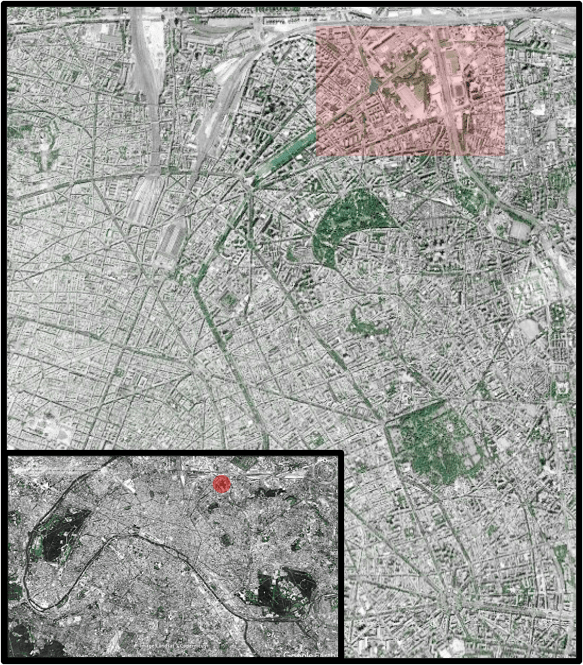
Source: Google Earth
Parc de la Villette is designed by Ar. Bernard Tschumi.
As shown in Fig. 01, it is situated on the North-Eastern corner of the city of Paris and has an area of about 135 acres. The park is over 1 km long in one direction and 700 m in the other. The site is bisected by the canal de l’Ourcq.
SITE CONTEXT
The park was developed in the early 1980s along with many other projects like Opera at Bastille, Arch at Tete-Defence and Louvre Pyramid, a period when Paris was undergoing urban redevelopment to attract more tourists. It was developed to revitalize the abandoned and undeveloped land previously used by the French national wholesale meat market and slaughter house.
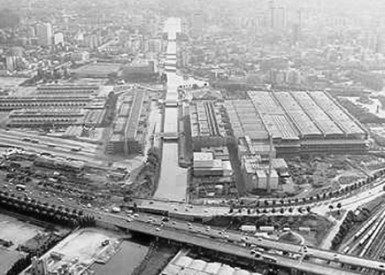
Source: https://www.publicspace.org/works/-/project/w023-parc-de-la-villette
A VISUAL GALLERY
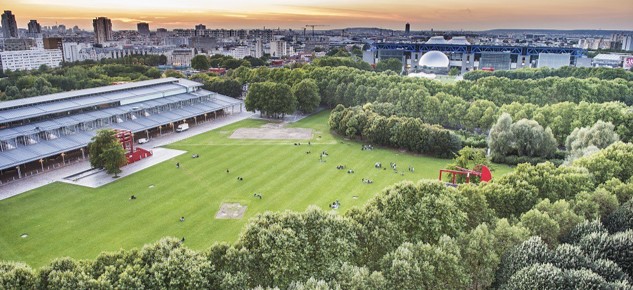
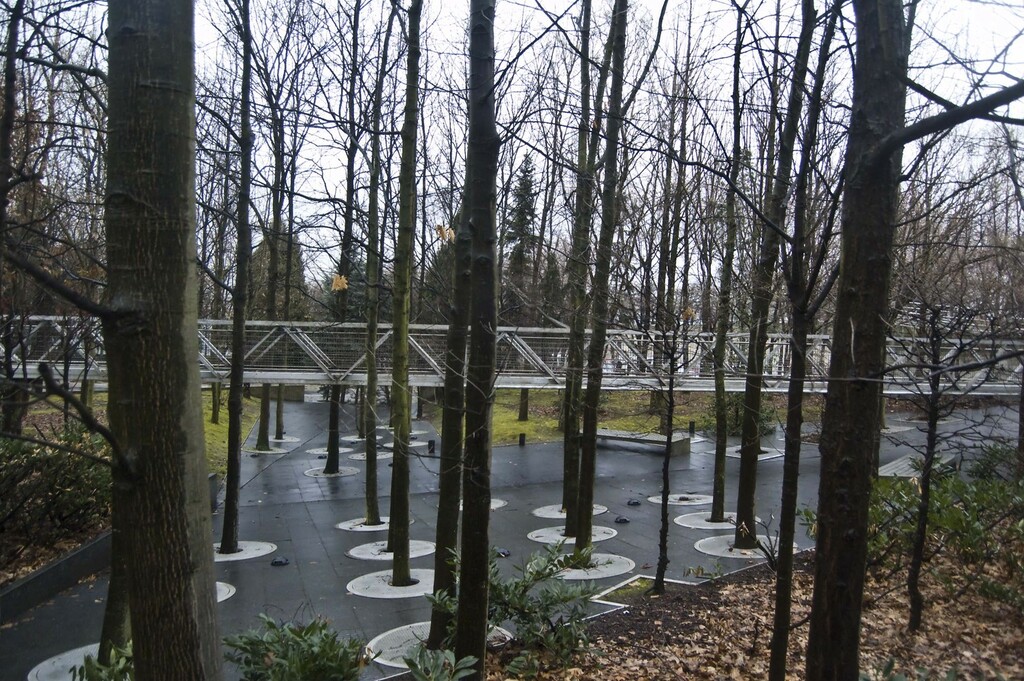
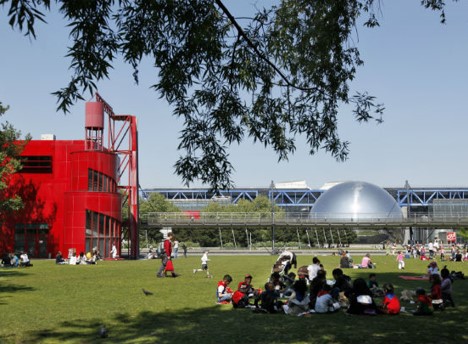
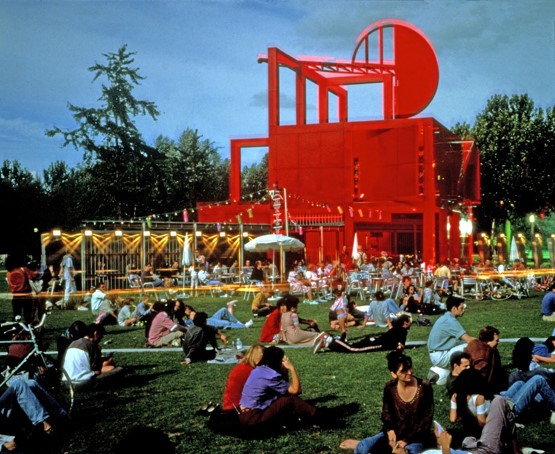
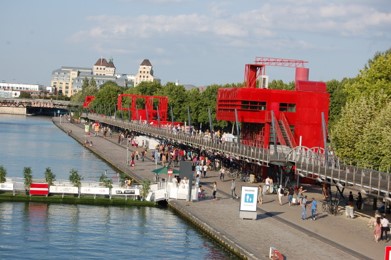
Fig.03-Fig.07: Parc de la Villette in images
Source: https://en.wikipedia.org/wiki/Parc_de_la_Villette#/media
A PROTOTYPE PLANNED FOR ADAPTABILITY TO THE CITY’S NEEDS OF BETTER ENVIRONMENTAL CONDITIONS
During the 19th Century Paris was plagued by air pollution and water pollution due to rapid industrialization and urbanization. In addition to acute pollution, the inner city areas were subject to the process of urban decay thereby causing prime areas of the city to be under-used or unused.
The site for Parc de la Villette was not a ‘virgin land’ but was located in a populated semi-industrial quarter of the inner city area and was formerly a slaughter house. Provision of 55 hectares of parkland in a former semi-industrial estate has helped in improving the air quality and mitigating urban heat island effects.
Another notable effort towards adaptability to the city’s needs of better environment is the revitalization of the historic canal de l’Ourcq that was constructed to connect the R. Seine to the R. Ourcq and bisects the Park. The revitalization of the canal has led to possibility of providing water related leisure activities for the citizens.
In addition to enhancement of air and water quality, Parc de la Villette incorporates sustainable design elements such as green roofs, rainwater harvesting, and energy-efficient systems thereby further aiding the city’s aim of better environmental conditions for its citizens.
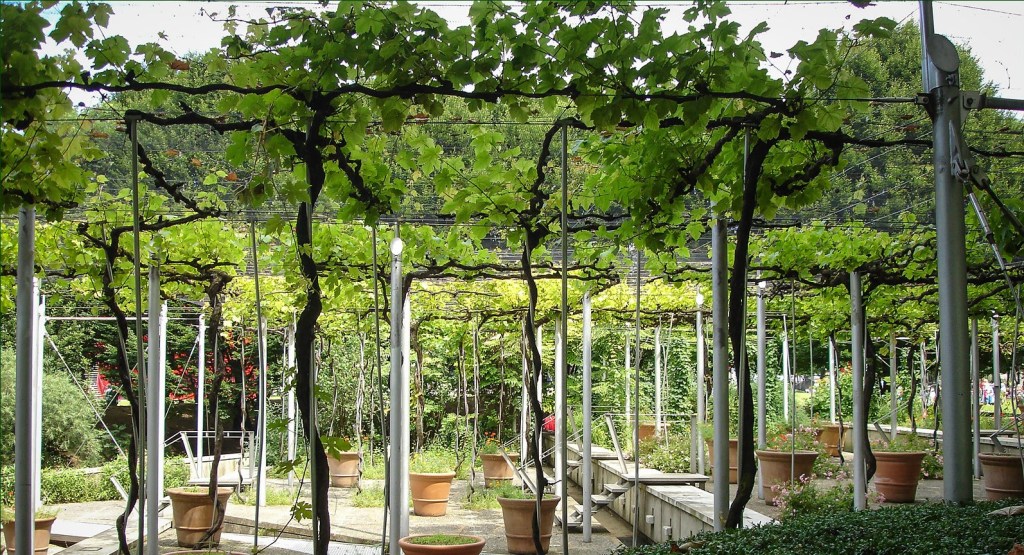
Source: https://www.eutouring.com.
The combined and synchronised effort of improving air and water quality along with implementing sustainable design elements and provision for 3000 sq.m of ecological gardens has allowed the Park to harbour urban wildlife habitats and restore ecological balance in the area.
A PROTOTYPE PLANNED FOR ADAPTABILITY TO THE CITY’S NEED OF REGENERATION
Parc de la Villette was built in the 1980s, a period during which the French Government launched the ‘Grands Project’ an initiative to modernize the country’s monuments and public spaces plagued by the urban processes of abandonment and decay. As a result this abandoned semi-industrial area lacking green spaces and located in the vicinity of the Grande Halle and Museum of Science and Technology was identified as an area requiring regeneration as part of a larger scheme aiming to transform Paris’s inner-city areas. The creation of Parc de la Villette not only helped regenerate the abandoned semi-industrial area but also stimulated development of the surrounding neighbourhoods.
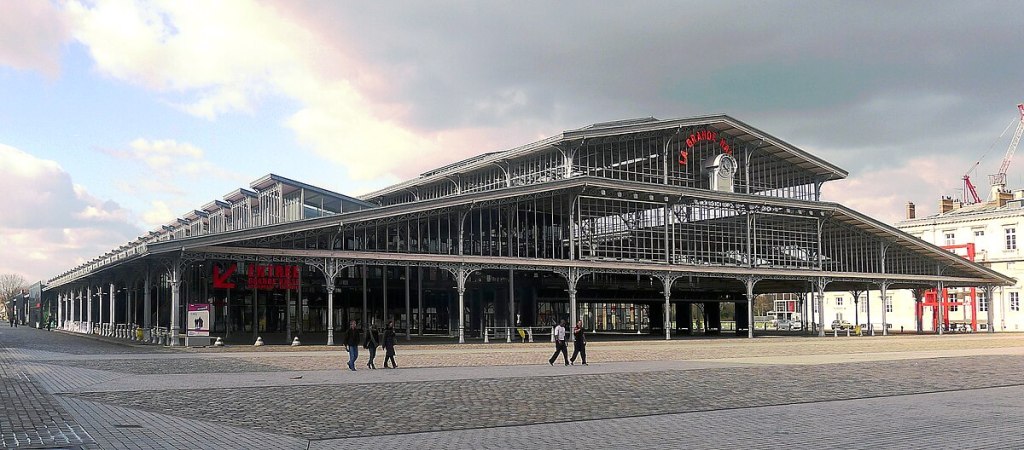
Source: https://parisjetaime.com
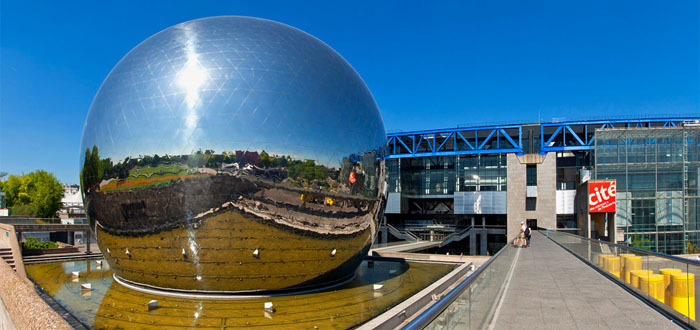
Therefore, Parc de la Villette serves as a prototype planned for urban regeneration that demonstrates how an abandoned semi-industrial estate along with its surrounding neighbourhoods can be transformed into a thriving, sustainable, and culturally vibrant public space while retaining historically and culturally significant monuments and integrating them into modern design.
A PROTOTYPE PLANNED FOR ADAPTABILTY TO THE CITY’S NEED OF MULTIFUNCTIONALITY
Parc de la Villette is aptly strategized for adaptability to the city’s need for multifunctionality wherein the design concept aligns with the recreational and cultural needs of the city by allocating space for workshops, gymnasium, bath facilities, playgrounds, exhibitions, concerts, scientific experiments, games and competitions by juxtaposing layers comprising of surfaces, lines and points.
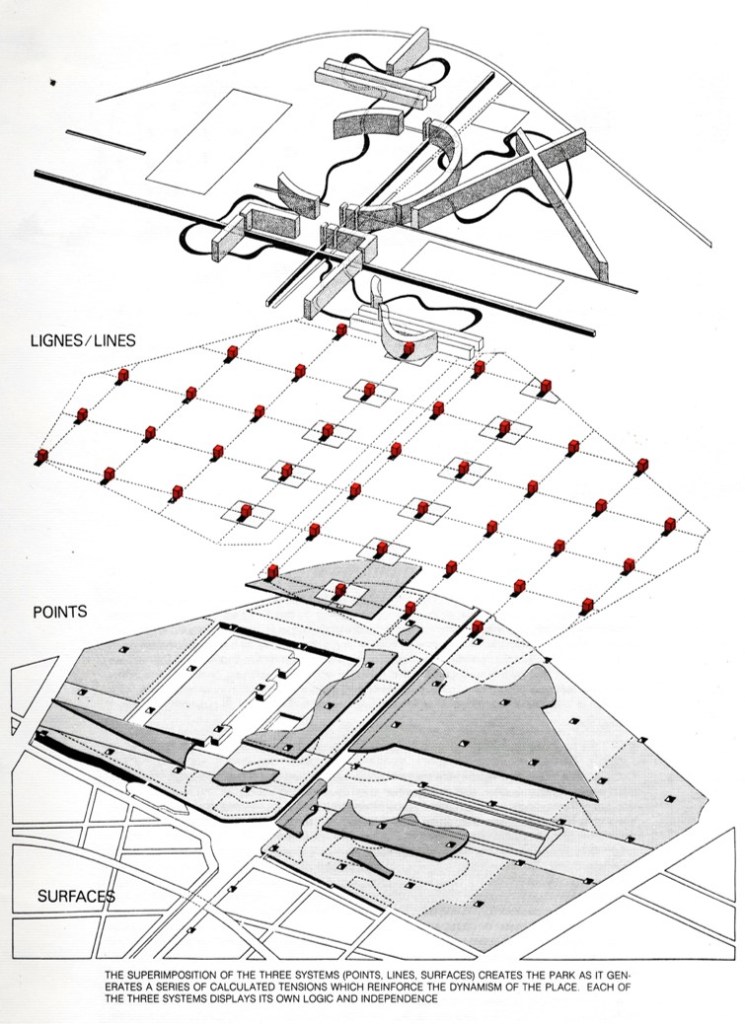
Source: https://thearchiblog.wordpress.com/2011/01/21/bernard-tschumi-parc-de-la-villette/
The layer of surfaces receive all activities requiring large expanses of horizontal space for play, games, exercises, mass entertainment, markets etc.
The layer of lines includes the Path of the Thematic Gardens, the seemingly random curvilinear route that links various parts of the park in the form of a carefully planned circuit.
The layer of points a.k.a follies are placed according to a point-grid co-ordinate system at 120m intervals. The advantages of this grid system are manifold. It is by far the simplest system establishing territorial recognition and one that is easily implemented.
The retention of culturally and historically significant monuments like the Philharmonie de Paris, Cité des Sciences et de l’Industrie, and other notable institutions synchronised with parks, thematic gardens and commercial spaces has allowed for mixed-use development addressing the city’s need for multifunctionality while creating a community hub where various events, festivals, and cultural activities are hosted. This planned community hub attracts visitors from diverse backgrounds in a space that was abandoned.
A PROTOTYPE PLANNED FOR CATERING TO THE CITY’S DIVERSE CITIZENS WITH DIVERSE LEISURE NEEDS
Parc de la Villette not only addresses the city’s need for multifunctionality at the macro-level through provision of spaces for diverse activities, but at the micro-level also addresses the diverse leisure needs of the diverse citizens through the layer of points designated as ‘Folies’.
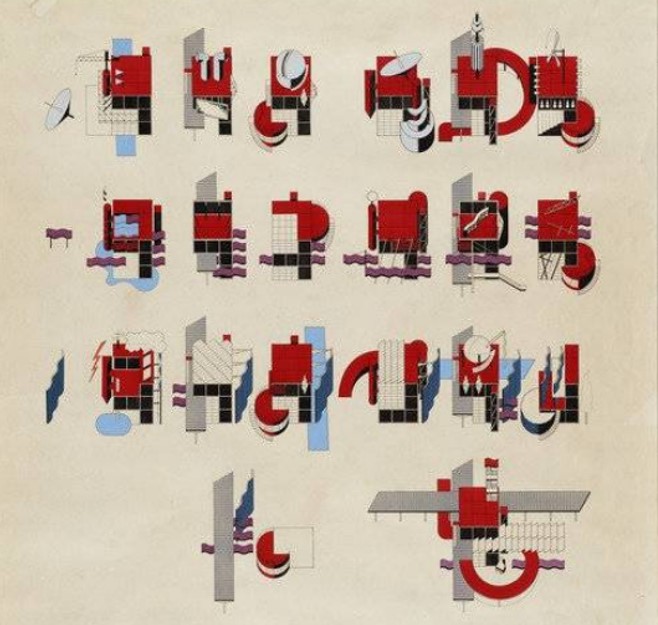
Source: https://www.louisebrodydesign.com/
‘Folie’ is essentially a deconstructed standardized cube of size 10m x 10m x 10m. These ‘Folies’ are scattered throughout the site at 120m intervals. Though these ‘Folies’ have a similar character and define the identity of the park, as shown in Fig.12 each of them has been deconstructed through a different set of permutation and combination allowing each ‘Folie’ to be unique. The concept of deconstructivism used to define a ‘Folie’ detaches it from any preconceived image allowing for a new definition of the space created.
Additionally, the no programmatic definition of these deconstructed structures also allows for freedom of interpretation and re-interpretation depending upon the user and its needs. The use of deconstructivism to detach the ‘Folie’ from any preconceived identity emerges from the architect’s belief that a park should not look like a park, the space should sacrifice its identity to allow a large number of users to interpret and re-interpret the space thereby utilizing the same space for an array of leisure activities depending on the needs of the user.
For instance, if a landscape programmed for walking is not designed in the conventional manner as a pathway but instead as a lawn, the designed landscape will allow for different interpretations by different users enhancing the usability of the space for different leisure activities.
A PROTOTYPE PLANNED FOR ADAPTABILITY TO THE CITY’S AIM OF BOOSTING TOURISM
Parc de la Villette has not only been a site of attraction for the citizens of Paris but also helped in defining the identity of Paris as an international tourist destination by playing a significant role in boosting tourism. As the third-largest park in Paris, it attracts millions of visitors each year, drawn to its unique blend of cultural venues such as the prestigious Conservatoire de Paris, unique themed gardens, and architectural innovation experienced through the deconstructed ‘Folies’ spread across the site.
CONCLUSION
Parc de la Villette designed by Ar. Bernard Tschumi, is a prototype that defines the role of 21st century urban landscapes. The design of Parc de la Villette emphasizes that landscapes in urban areas have the potential to address various needs of the city such as provision of better environment, mitigating extreme environmental conditions, creating biodiversity hotspots, restoring biodiversity balance, allowing for regeneration of abandoned spaces, providing for multi-functional spaces that are cohesive for different population groups while continuing its traditional role of providing for relaxation.
Bibliography:
- Cinegramme folie : Le Parc de la Villette : Paris nineteenth arrondissement Book. Paris: Butterworth Architecture, 1987.
- Tschumi, Bernard. Architecture and Disjunction. Massachusetts: MIT Press, 1996.
- Turner, Tom. Gardenvisit.com. 28 March 2017.`
 Terrain Tapestry
Leave a comment