The Mughals Empire came into existence during the Medieval Era. The Mughals reigned over many parts of South Asia from the present day Afghanistan in the North-West to the present day Bangladesh in the East and introduced different architectural typologies which were influenced by the Persian style of architecture. One such architectural typology was the ‘Bagh’. The mention of this architectural typology brings to our memory the image of a rectilinear plot divided into four by water channels having a religious symbolism. This typology seen in the Mughal Gardens in India can be traced back to the earliest known records of Persian Gardens at Pasargadae.
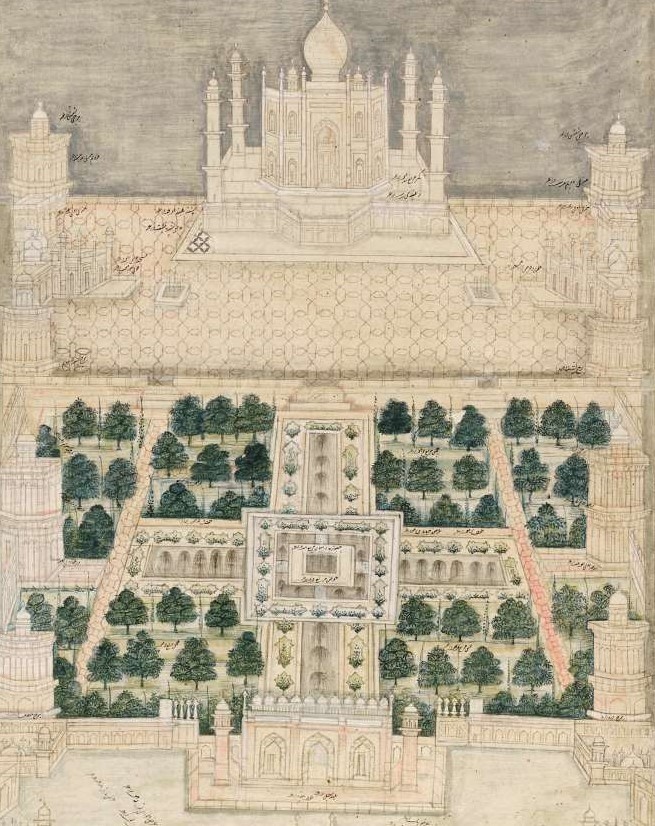
Source: http://www.gardenhistorymatters.com/2012/01/tragedy-unfolding-for-taj-mahal.html
ANECDOTES FROM THE FIRST PERSIAN GARDEN AT PASARGADAE
The Persian garden at Pasargadae which were laid out during the 6th Century B.C. highlights the fact that the layout of this garden was deeply thought of in terms of functionality and context of the site and not conceptualized on religious symbolism.
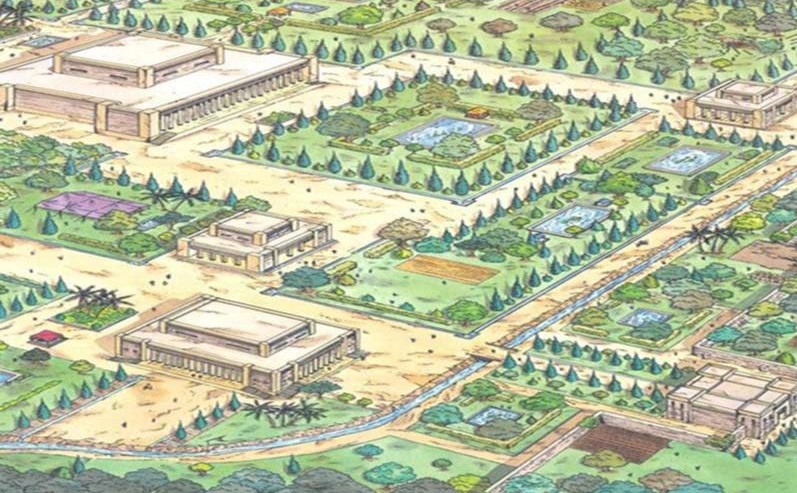
Source: https://www.eavartravel.com/blog/2023/8/9/130679/pasargadae
Pasargadae is located in present-day Iran and comprises of arid and dry climatic conditions. Water availability is the key to sustenance of a garden and therefore the water channels were appropriately placed and the garden layout then developed. This layout later became a typology to be replicated but the very basis for this layout were not lost in fact the gardens developed by the Mughals depicted the brilliance of hydraulic engineering both at macro-levels and micro-levels.
MUGHAL GARDENS IN INDIA
The Mughals undertook the construction of many gardens in India such as the Agra Garden Complex comprising of the world renowned Taj Mahal Gardens, Mahtab Bagh, Buland Bagh, Ram Bagh, etc.; the Shalimar Bagh, Nishat Bagh, Achabal Bagh, etc. in Kashmir; Qadsia Bagh, Amrit Udyan, etc. in Delhi and many more gardens in Haryana, Karnataka, Maharashtra, Punjab, Rajasthan and Uttar Pradesh. These gardens depict the prowess in hydraulic engineering both at the macro and micro levels.
MACRO-LEVEL HYDRAULIC ENGINEERING THROUGH SITE SELECTION:
The prowess in hydraulic engineering can be witnessed by their selection of sites for the purpose of garden development. The Mughals strategically chose sites near rivers or waterbodies to meet the water requirement of the gardens.
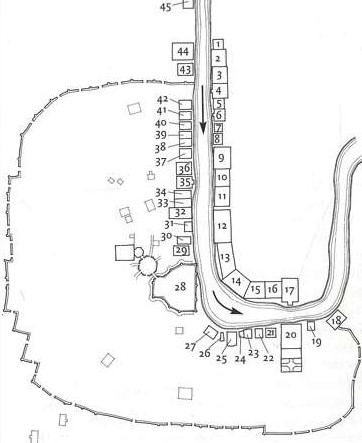
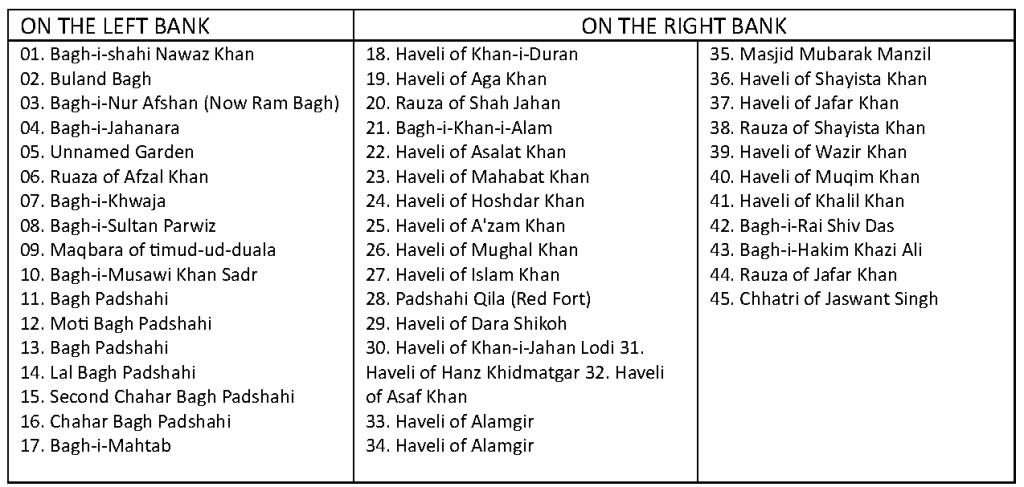
Source: The complete Taj Mahal by Ebba Koch
For instance as shown in Fig. 03, the Mughal city of Agra comprising of around 45 Gardens including some world renowned Gardens such as the Taj Mahal Gardens, the Mahtab Bagh (Bagh-i-Mahtab), Ram Bagh (Bagh-i-Nur Afshan), etc. were located on the banks of the river Yamuna. Likewise the Shalimar Bagh and Nishat Bagh in Kashmir were developed on the banks of the Dal Lake, the Mughal Garden at Pinjore was developed near the tributary of R. Ghagar, the Lotus Garden in Rajasthan was developed near the R. Chambal and the Brindavan Gardens in Karnataka was developed on the banks of the R. Kaveri.
The Mughals selected sites near River and Lakes to develop a Bagh or Garden since sustenance of a Bagh required large quantities of water year around. The location of a Bagh near a water source allowed these Bagh to benefit from the high groundwater levels generally observed in the flood plains of rivers or areas surrounding lakes thereby reducing the need to draw water from an external source and incase of unavailability of ground water during peak Summers the water could be drawn from the adjoining River/ Lake thereby ensuring year around supply of water for Horticultural activities.
MACRO-LEVEL HYDRAULIC ENGINEERING THROUGH FORMATION OF TERRACES:
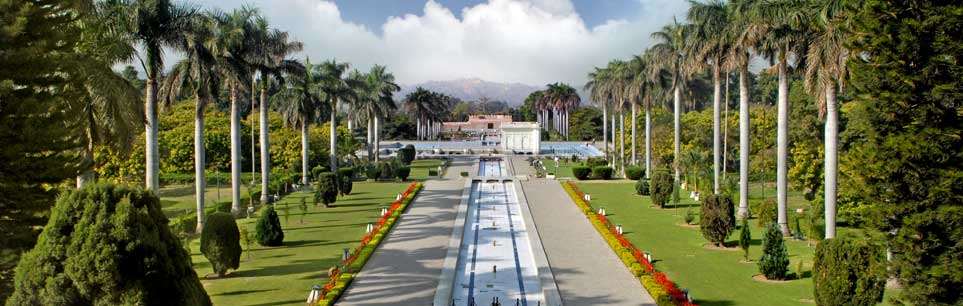
Being on the banks of a River or Lake, the lay of land of the site selected for developing a Bagh was often blessed by a gradual slope grading towards the lake thereby allowing excess water to flow away from the garden into the adjoining waterbody. This engineering observed in the setting of land near a natural waterbody was well adopted in the Mughal Gardens. Inorder to engineer the natural flow of excess water into the lake, the gradual slope of land selected for developing a Bagh was terraced as indicated in Fig.04. These terraces facilitated controlled flow in water channels from the highest terrace to the lowest terrace making optimal use of site gradient and gravity to serve the purpose of providing water throughout the garden and draining the excess water.
MACRO-LEVEL HYDRAULIC ENGINEERING THROUGH PLANNING:
Source: http://www.columbia.edu
Source: https://archnet.org/sites
Source: Shalimar Bagh, Srinagar by Haenraets J. Schwann, A. and Atelier Anonymous, 2013
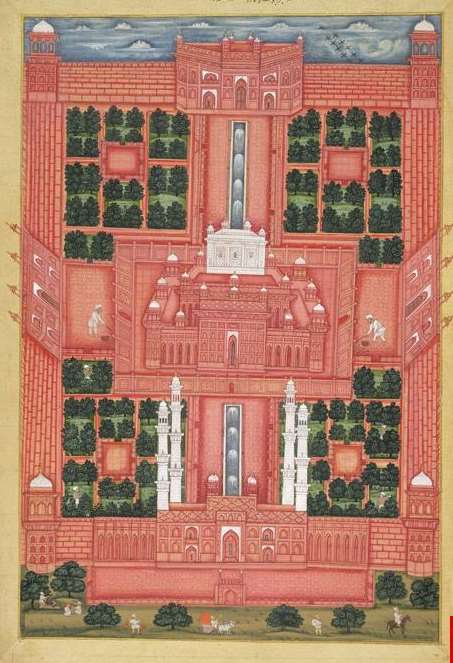
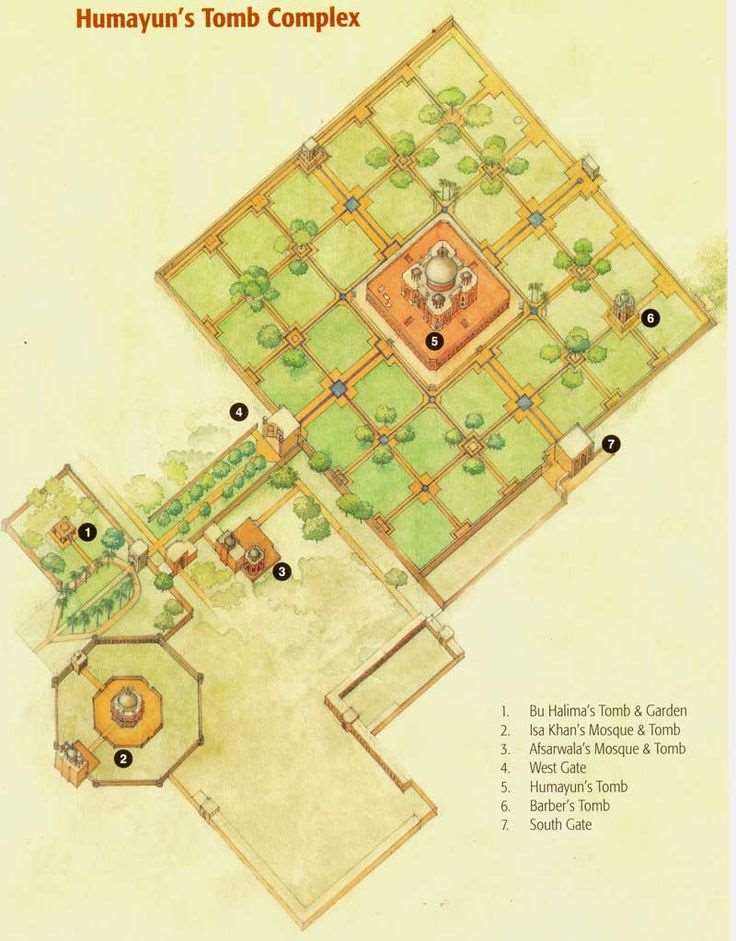
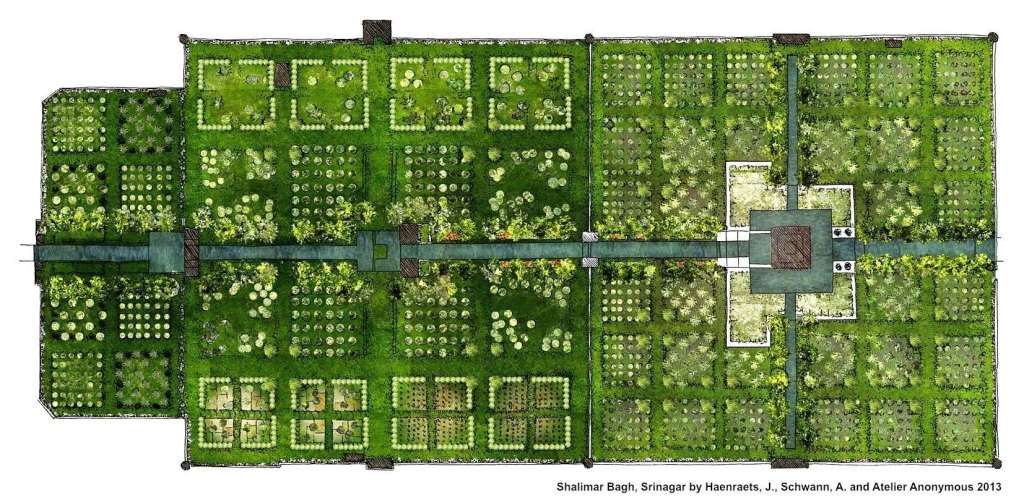
Fig. 05, Fig. 06 and Fig. 07 depict the Layouts of Gardens at Mughal emperor Akbar’s Tomb, Gardens at Mughal Emperor Humayun’s Tomb and Shalimar Bagh. While these gardens bear a notable difference in scale, location and time of development, the one synonymous characteristic observed in all Mughal Gardens is the presence of a centrally located bisecting water channel. At times this water channel is further divided. This water channel is functionally an aqueduct designed for the purpose of irrigation. Therefore these aqueducts are laid in a manner that divides the site in equal parts to ensure uniformity of water supply.
The prowess in hydraulic engineering depicted in Mughal Gardens at the macro-level often remains unnoticed through the perspective of a lay man. However, the prowess in micro-level hydraulic engineering responsible for an unforgettable experience created by the centrally flowing water and the soothing microclimate is often appreciated and makes the Bagh worth repeated visits.
MICRO-LEVEL HYDRAULIC ENGINEERING THROUGH DESIGNING FOR HUMAN COMFORT:
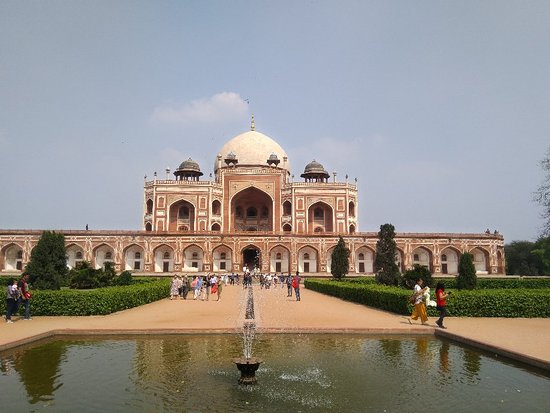
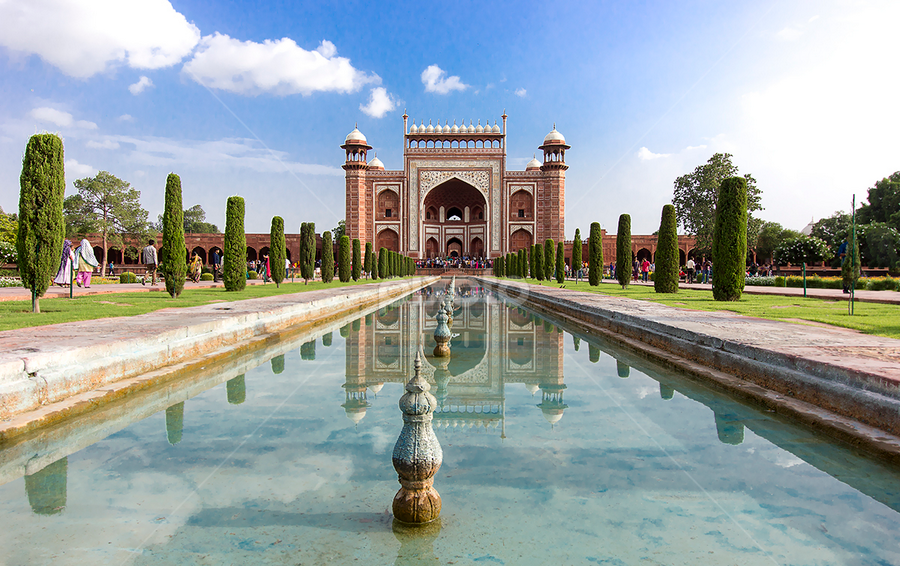
As shown in Fig.08-Fig.10, the Mughal prowess in micro-level hydraulic engineering lies in their aesthetic treatment of an irrigation channel to create an environment for human comfort in an otherwise arid region of Delhi and Agra.
This feat has been achieved by employing the principle of evaporative cooling wherein the flowing water uses heat from the surrounding and converts into a gaseous state thereby cooling the space around. Since these fountains are capable of cooling very small spaces, the fountains have been repeated and installed at close intervals along the entire length of the Bagh thereby amplifying the cooling effect with the aim to lower the temperature of the entire Bagh creating an environment conducive for human use in an otherwise arid region.
Source: https://www.fabhotels.com/blog/humayuns-tomb-delhi
Source: https://www.pixoto.com

Source: https://theconversation.com
MICRO-LEVEL HYDRAULIC ENGINEERING THROUGH PLANNING FOR AMPLIFIED GRANDEUR:
While the grandeur of Mughal architecture can be be attributed to symmetry in design, balanced use of elements from Persian Architecture, intricate carvings, use of exquisite materials, proportions, etc. but the amplification of this grandeur to create experiences impacting the very senses of the visitor can be attributed to engineered optical illusions. These optical illusions are another notable feature of the Mughal prowess in micro-level engineering achieved by making optimal use of reflections created by the surface of water.

Source:https://www.google.com
While the virtue of surface reflection is observed in most of the Mughal Gardens, the most renowned example is that of the Taj Mahal Gardens as understood from Fig. 11 wherein the water surface in the aqueduct acts as a mirror allowing the reflection of the monument thereby enhancing its grandeur and amplifying the impact that the monument has on the visitor. This virtue of surface reflection is also celebrated when large pools of undisturbed water surface shimmer while reflecting light.
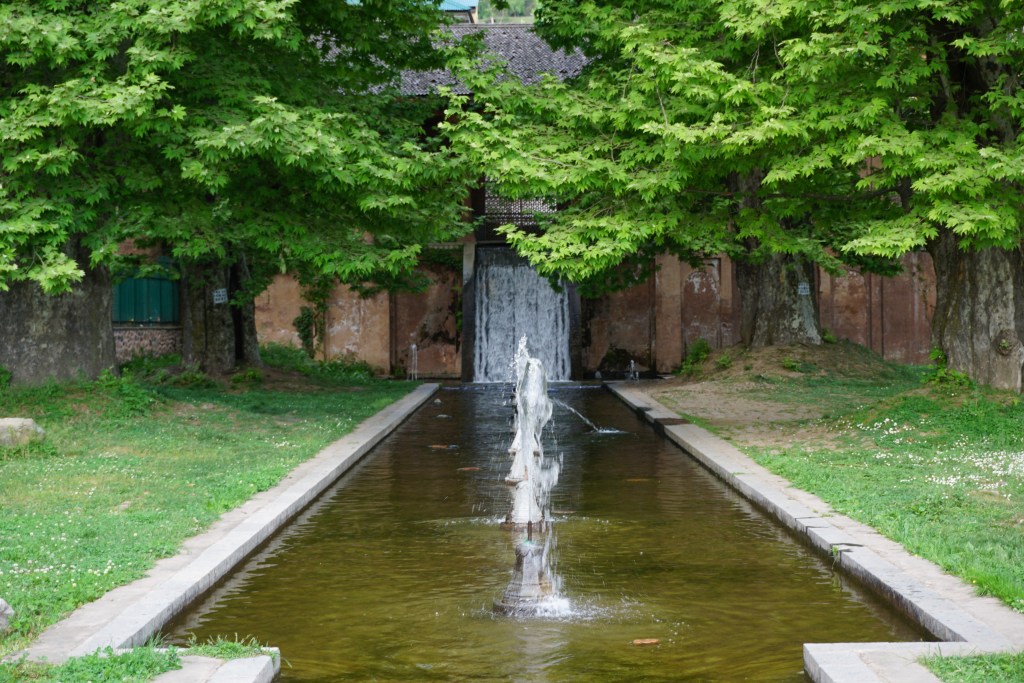
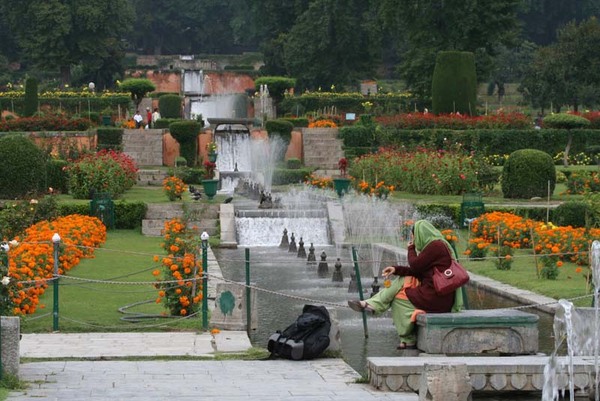
Another notable feature amplifying the grandeur of Mughal Gardens is the quality of different sounds created by water falling from different heights engineered through water jets, bubblers and water sheets as observed in various Mughal Gardens and indicated in Fig. 12 and Fig. 13.
Source: https://www.google.com
Source: https://www.gardenvisit.com
CONCLUSION:
The Mughal Empire came into being during the Medieval era and the ‘Bagh’ developed by them depicts their prowess in hydraulic engineering never before seen or experienced in Gardens. So profound was their hydraulic engineering both at macro-level and micro-level that the Bagh built during the Medieval Era have sustained the test of time to function smoothly till date.


 Terrain Tapestry

Leave a comment