The English garden style began developing during the post-civil war period and flourished during the 18th-19th Century. This style took inspiration from landscape paintings and was greatly influenced by the Chinese gardens.
As the English gardens were inspired by landscape paintings the trend of creating picturesque scenes emerged. These scenes depicted the larger landscape of the British Isles in the form of rolling grass, woodlands and water bodies with each scene narrated by different architectural elements such as temples, bridges or constructed ruins.
However, these picturesque scenes unlike paintings did not exist in isolation, they spread over an area and were to be experienced as a space. The English engineered the skill of developing a connection between these picturesque landscapes creating a cinemagraph of experiences.
A cinemagraph comprises of a series of images where each image can be viewed in isolation and their sequence creates a narrative. Similarly, the English gardens formed spatial cinemagraphs where each picturesque scene could be experienced in isolation and as one travels through the created landscape the reliance on the previous picturesque landscape becomes evident.
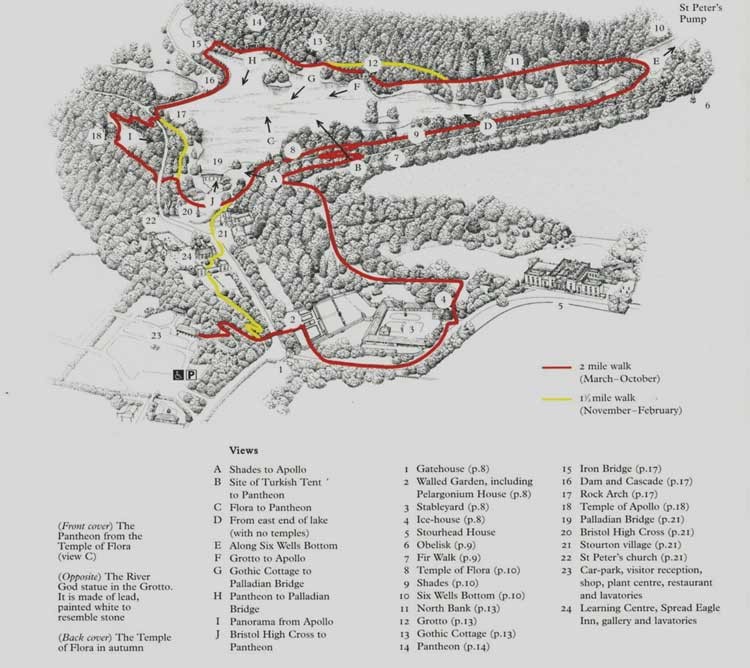
For instance, in the gardens of Stourhead at Wiltshire, the two miles walk around the lake functions similar to a cinemagraph creating a narrative of picturesque landscapes. Each location marked on the adjoining map is designed as a landscape that has an isolated identity and can be experienced independently but while treading through the designed path one comes across a new scene bearing a relation to the previous scene and yet independent of it. Just as in a movie the succeeding image is not revealed, the landscape is designed to create curiosity regarding the succeeding scene.
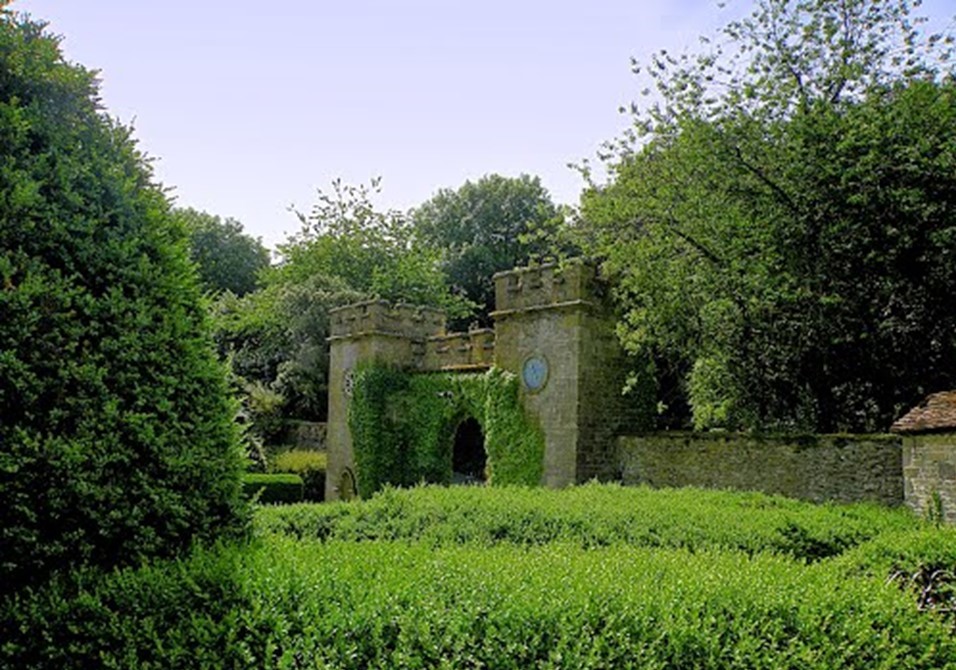
Fig.02 depicts the picturesque landscape at location 01 (Refer Plan in Fig. 01). The gate house is set in a landscape creating a scene that has an independent experiential value. This scene has been designed to allow no views into the next scene and creates a sense of curiosity regarding the landscape. The planting has been designed to hide and reveal spaces.
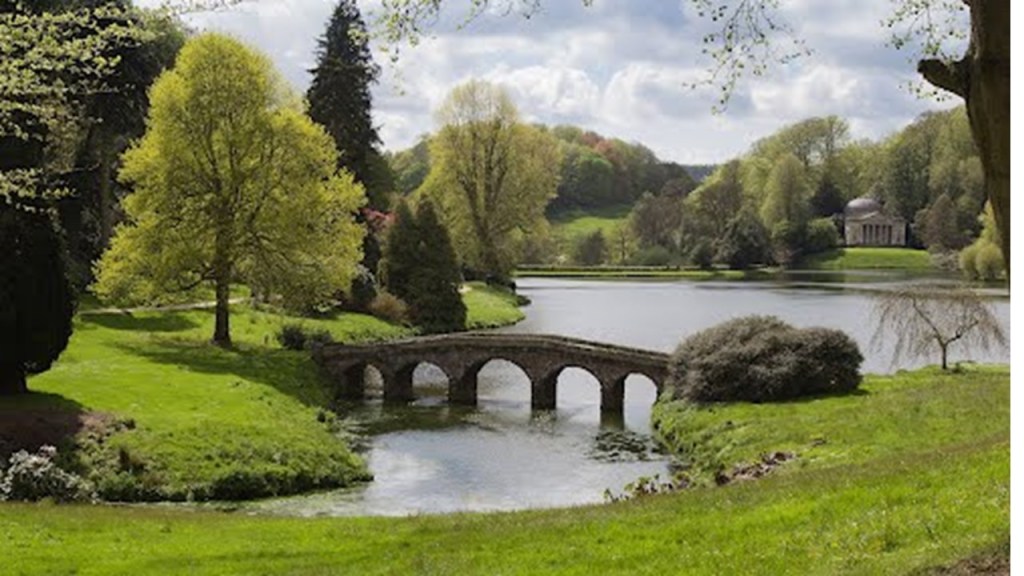
While treading along the pathway, there are glimpses of the Palladian bridge but the bridge is revealed completely only when viewed from a particular location. While viewing the Palladian bridge from this location the surrounding landscape lies beyond the trees and is not revealed creating an independent picturesque scene to be experienced from this particular location. Since there are glimpses of this bridge from different locations the narrative is constructed through a series of these picturesque scenes. Beyond the Palladian bridge in the far distance there is a glimpse of an architectural structure.
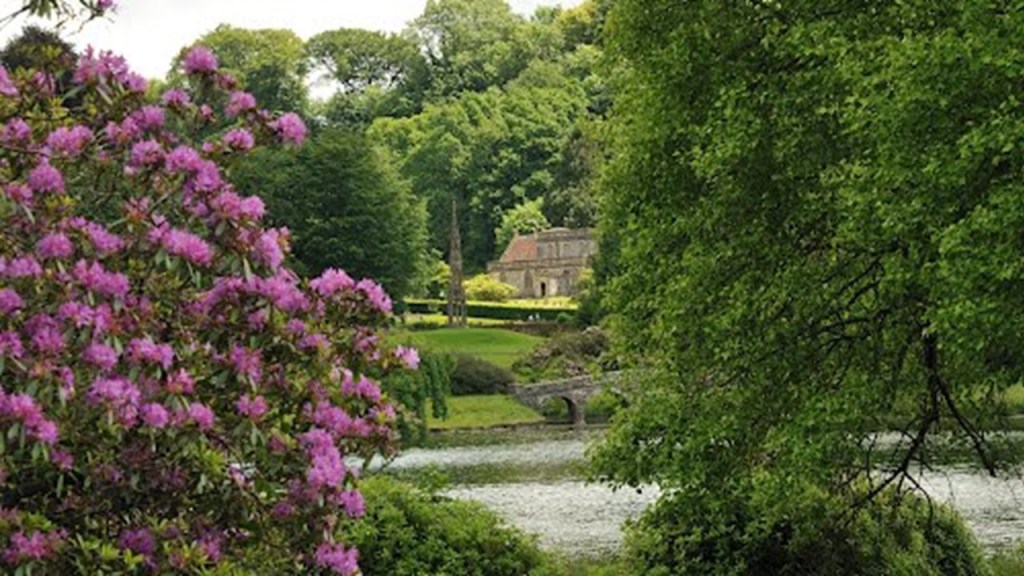
On exploring the path further, only a glimpse of the Palladian bridge is visible while most of it remain hidden beyond the trees and the focus shifts to the tree with bright pink flowers narrating another story. The architectural element that was seen only as a glimpse in the previous picturesque scene starts gaining prominence in this scene and further beyond this element becomes the focus of another picturesque scene.
The English gardens explored a different kind of visual illusion where different picturesque scenes have an individual identity. Each scene is revealed completely from a particular location. While moving along the pathway this scene begins to fade and only glimpses are visible leading to the formation of another scene. At some distance, ahead the new scene is completely revealed creating a cinemagraph of experiences.
 Terrain Tapestry
Leave a comment