The Renaissance was a period in European history from the 14th to the 17th Century. It began as a cultural movement in Italy and spread throughout the European continent. During this period art and science were closely related. For instance, Leonardo da Vinci studied anatomy to better understand the human body which allowed him to create better paintings. A similar trend of understanding the various natural processes and their depiction to create the feel of a natural environment can be observed in the design and detail of gardens.
This trend of an informed and intended depiction of a natural process in creation of gardens can be observed at two levels: the macro level and the micro level. The macro level constitutes the setting of the site and its relation to the larger landscape whereas the micro level constitutes the detailing of the various elements in the garden to create a feel of the natural environment.
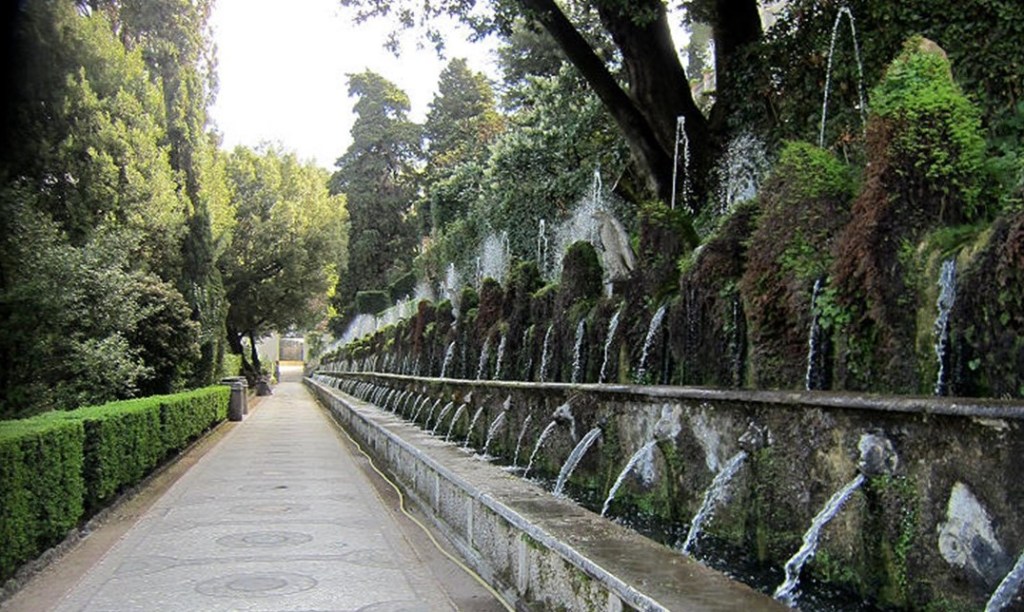
Micro level depiction of the natural processes can be observed in the detailing for the path of hundred fountains in Villa d’Este at Tivoli. As shown in Fig. 01, the path of a hundred fountains at first glance demonstrates the extreme progress in the realm of hydraulic engineering achieved during the Period.
It also demonstrates the acute observations of the natural processes. The fountains on the pathway are designed in tiers. The layered fall of water reminds of a natural waterfall as indicated in Fig. 02. The boulders seen also remind of the topographical setting of the waterfall in nature. In a natural setting the formation of a waterfall is characterized by a thin channel at the apex, the confluence of many channels in the intermediate stage increasing the volume of water ultimately allowing it to fall with a gushing sound. The increase in volume of water from the apex to the base demonstrates the understanding of this process and its careful depiction.
In natural environs, the topography surrounding a waterfall is generally moisture laden and covered with moss-like vegetation. This event is also carefully depicted and the planting on the boulders around the fountains planned for.
Another significant micro-detail observed in the path of a hundred fountains is the moss formation on damp surfaces.
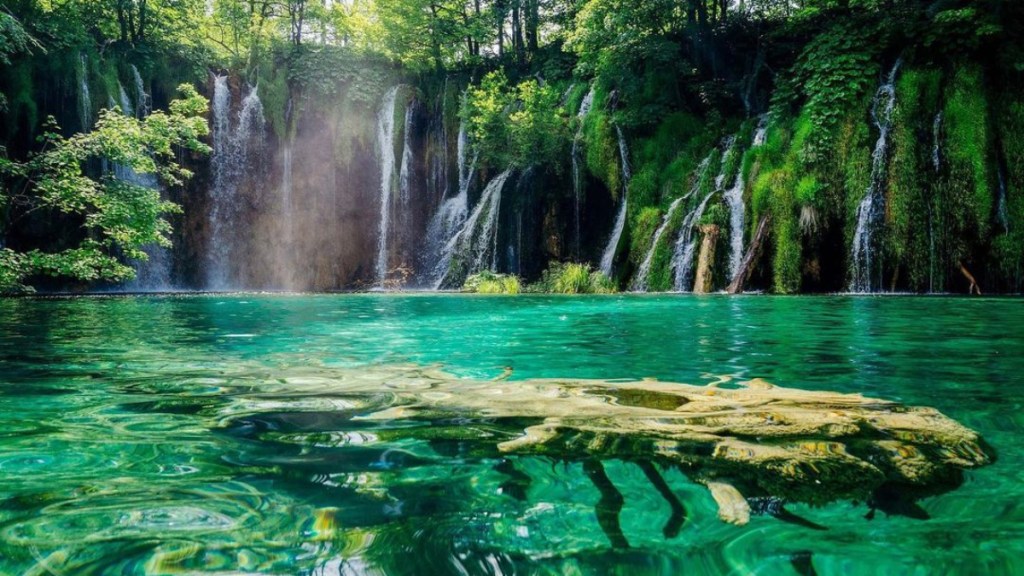
This process of moss formation has also been designed and detailed for. The choice of a porous stone that allows water to seep instead of abundantly available marble in the Italian peninsula bears witness to the fact that nature was curiously observed, the different natural processes understood and landscapes were engineered to allow the natural processes to take place creating the sense of a natural environ.
In addition to the enhancement of the natural processes the micro-level detailing also accounted for the visual appearance of these elements by appropriate use of materials, finishes and textures to create them. For instance, in the above example the colour and texture of the material used for cladding and coping the walls of the water-spouts gives a rustic appearance, similar to the appearance of a stone in the natural setting.
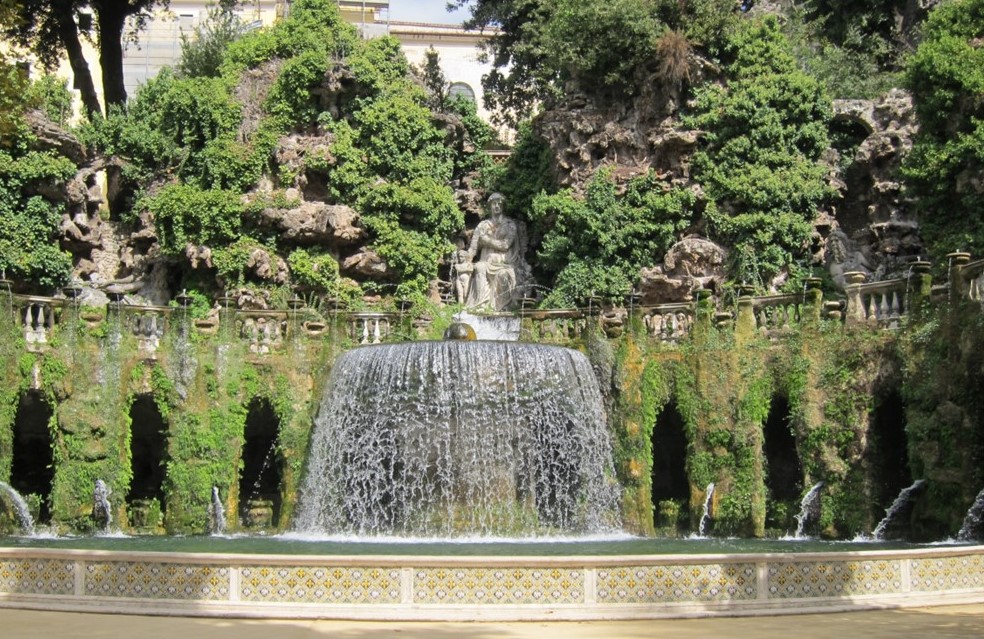
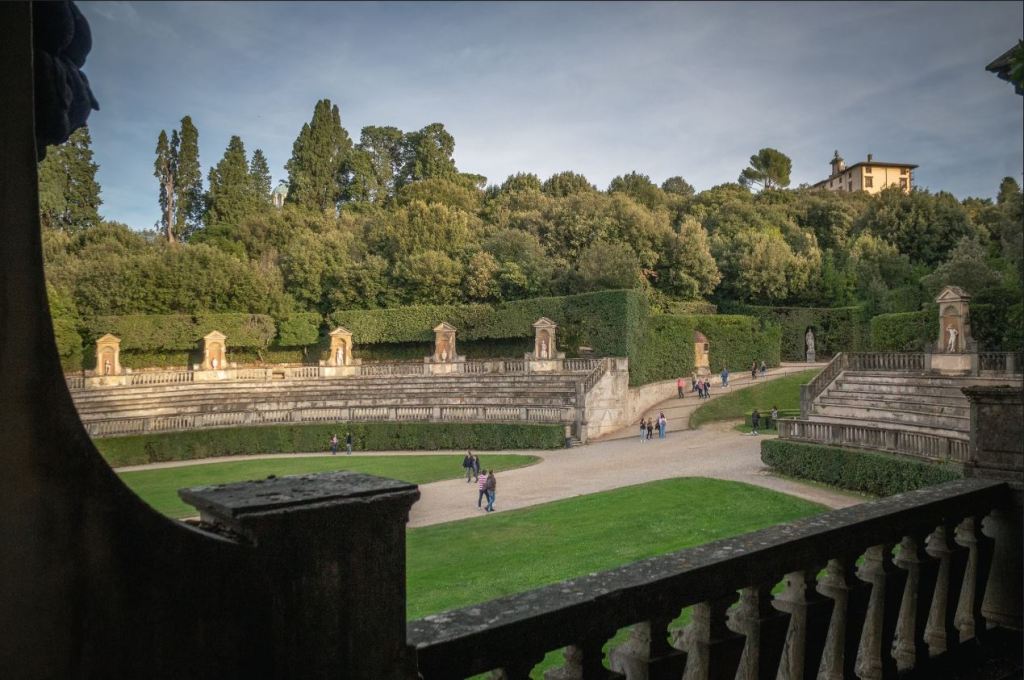
The understanding of the natural processes and their depiction in gardens is not unique to the path of hundred fountains in Villa d’ Este at Tivoli but is a recurring phenomenon that can be distinctly observed in many Italian gardens during the Renaissance period. For instance, the setting created for the Oval fountains in Villa d’Este (indicated in Fig. 03), the layered planting in the backdrop of the Amphitheatre in Boboli gardens at Tuscany (indicated in Fig.04), etc.
The scientific progress during the Renaissance period, the curiosity to understand the natural world and derivation of inspiration from nature led to the recreation of the various natural processes. These natural processes of moss formation, creation of the waterfall etc. were desired and enhanced through careful detailing at micro-level. These untamed natural processes were catalyzed and celebrated in the Italian gardens with the objective of creating a sense of the natural setting. Furthermore, a series of these micro level spaces allowed the planned garden to respond to the larger landscape, allowing views of the same and celebrating the untamed natural setting of Italy.
Bibliography:
- Piperno, Roberto. Rome in the Footsteps of an XVIIIth Century Traveller. 01 April 2017.
Further Reading:
- Italian gardens of the Renaissance – Shepheard, J.C. & Jellicoe, G.A
- The landscape of man – Geoffrey and Susan Jellicoe
- Landscape architecture: an illustrated history in timeline, Site plans, and Biography – William A. Mann
- A history of architecture- Sir Banister Fletcher
- Italian gardens- Masson, Geogina
- www.gardenvisit.com
 Terrain Tapestry
Leave a comment