The Renaissance was a period in European history from the 14th to the 17th Century which began as a cultural movement in Italy. French Renaissance began c. 1500 AD and was greatly influenced by Italian Renaissance. During this period art was inspired by the realities of life and the concept of ‘perspective’ was explored.
CONCEPT OF PERSPECTIVE AND VISUAL ILLUSIONS IN ART DURING THE RENAISSANCE PERIOD
For instance, Masaccio was the first to use linear perspective by employing the technique of a vanishing point. The use of perspective in paintings created a visual illusion giving a sense of real space to a flat canvas as indicated in Fig.01 to Fig.03.
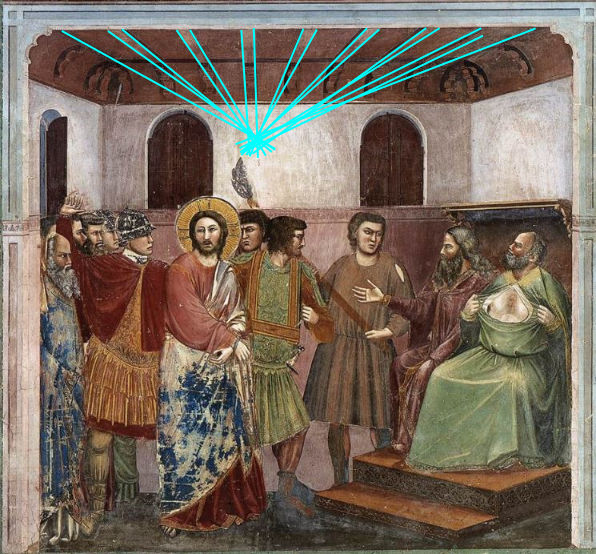
c. 1305, Scrovegni (Arena) Chapel, Italy Source: http://www.essentialvermeer.com/technique/perspective/history.html
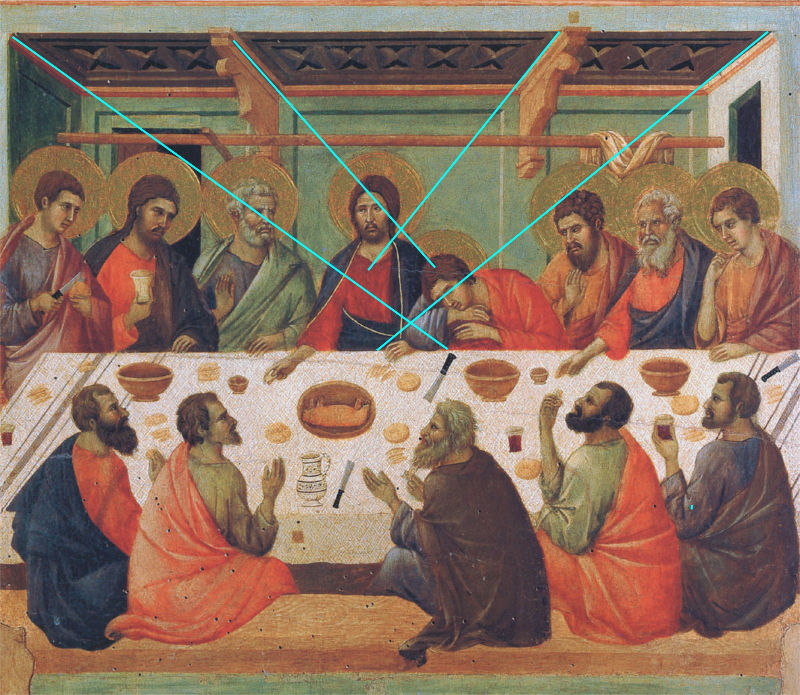
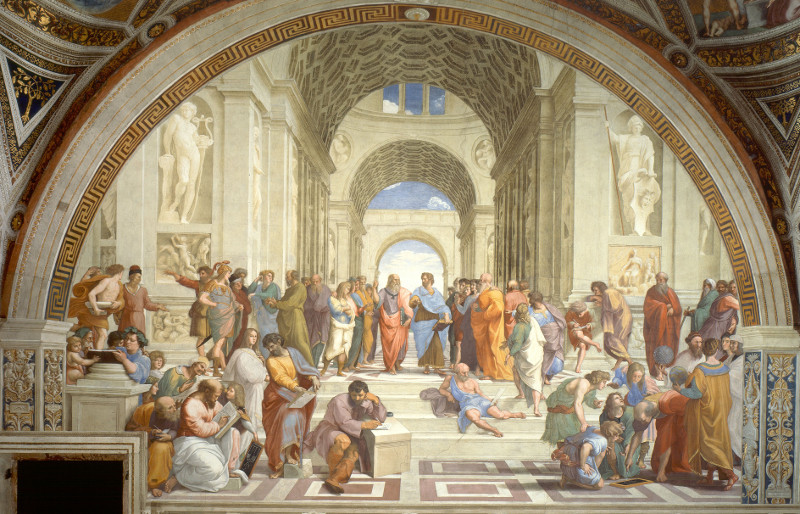
c. 1509–1511, Apostolic Palace, Vatican City Source: http://www.essentialvermeer.com/technique/perspective/history.html
THE CONCEPT OF PERSPECTIVE IN ARCHITECTURE AND LANDSCAPES OF THE RENAISSANCE PERIOD
As most artists of this period were also architects the concept of ‘perspective’ and ‘visual illusions’ were further explored and implemented in their architectural works. A similar trend of creating perspective and visual illusions can be seen in the French gardens of this period. The linear perspective created by the central axial pathway meeting the horizon in a vanishing point has been enhanced by carefully detailing the three surfaces – ground, sky and the enclosing vertical surface of trees.
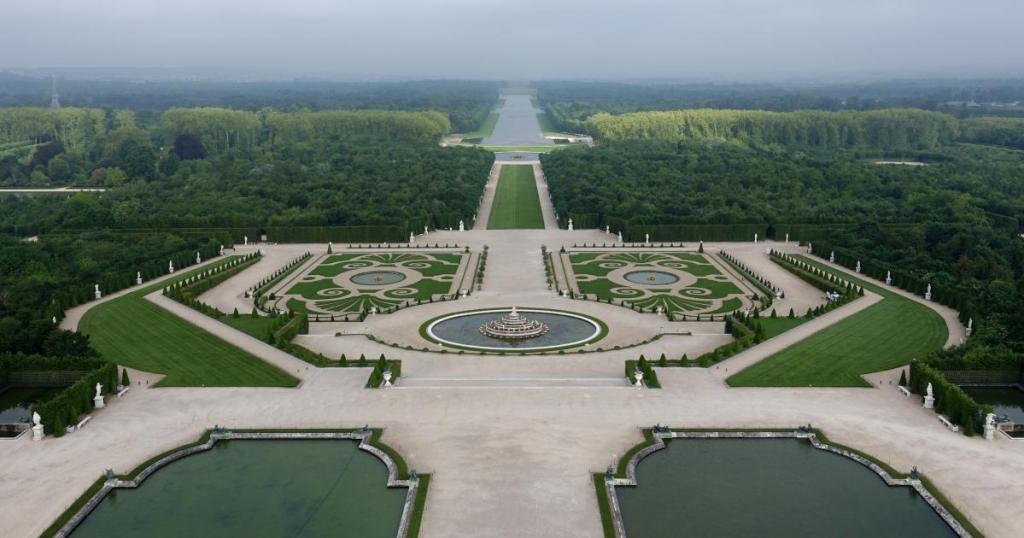
CREATING PERSPECTIVES AND VISUAL ILLUSIONS THROUGH PLANTING DESIGN AT GROUND LEVEL
The sense of perspective is enhanced on the surface of ground by the planned transition of detailing in ground covers. For instance, in the gardens of Vaux le Vicomte designed by Andre Le Notre-a Landscape Architect with immense knowledge in the fields of mathematics, scale and anamorphosis, ground covers are planted near the chateau to create intricate geometric forms called parterres. Further away from the chateau these intricate forms disappear and the ground cover beyond consists of only grass.
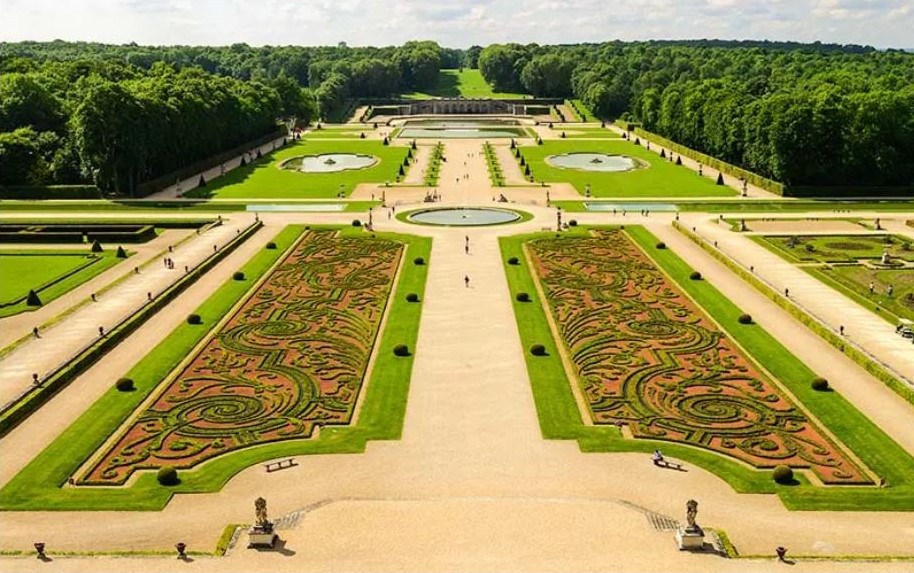
This transition utilizes the concept of perspective that spaces near the viewer appear to have finer details and these details appear to fade in the spaces beyond. The application of this principle has made the space beyond the circular waterbody appear further away than it actually is.
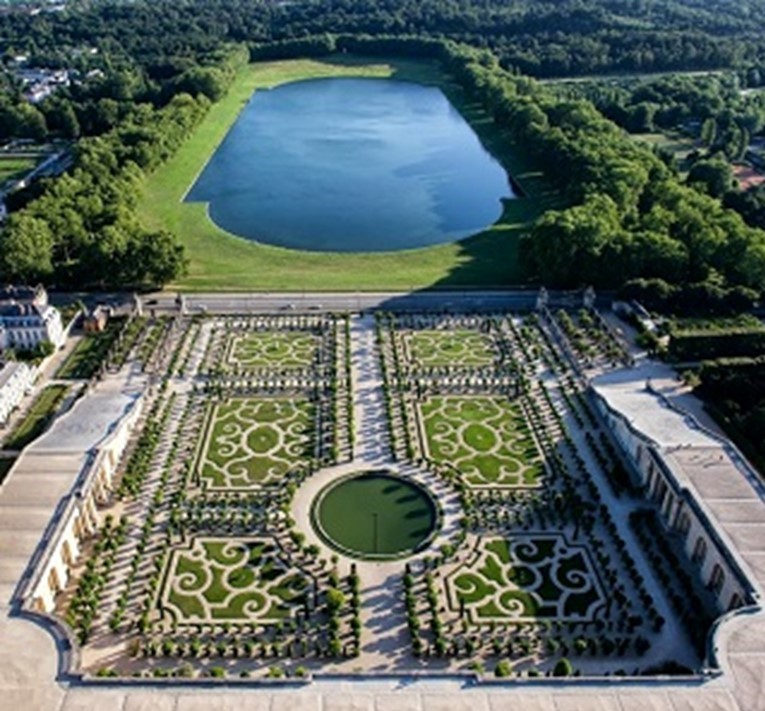
The perspective has been manipulated to make the space look larger by the use of colour in the planting scheme. Ground covers having colour variation are used in the planting scheme near the chateau whereas beyond the circular waterbody there is no colour variation seen in the ground cover. This variation in the choice of planting applies the principle of perspective that colours can be easily distinguished for surfaces that are close to the viewer and surfaces that are farther away appear to have one colour. Such intricate geometric patterns and the careful use of colour in groundcovers to manipulate perspectives with the intention of making the space look larger than it actually is are also observed in the other gardens of this period, for instance, the gardens of Versailles.
CREATING PERSPECTIVES AND VISUAL ILLUSIONS THROUGH PLANTING DESIGN ALONG THE ENCLOSING VERTICAL SURFACE
In the Gardens of Vaux le Vicomte the sense of perspective has been further enhanced along the vertical surfaces i.e. along trees by strategically positioning the trees based on the virtue of their height. Based on the principle of perspective that objects closer to the viewer appear larger and the size of objects appears to diminish with increase in distance from the viewer has been employed while planning the layout of trees.
The use of this principle of perspective can be observed in the layout of trees in the Parterres de Broideries, Vaux le Vicomte as deciphered from Fig.05. Two distinctly different trees are observed beyond the circular waterbody. The tree placed near the waterbody are bigger and the other tree type used beyond these big trees are much smaller. The designer-Andre le Notre has refrained from using one tree species that would create a natural perspective instead he has planned the perspective by using a variation of tree species based on the virtue of their height to make the vanishing point look farther away than it actually is making the garden look larger than its true size.
CREATING PERSPECTIVES AND VISUAL ILLUSIONS THROUGH PLANTING DESIGN ALONG THE SURFACE OF SKY
The canopy of trees enhances the sense of perspective along the surface of the sky. As trees with larger canopy are positioned near the chateau and smaller ones farther away, the eye travels along the imaginary line vanishing into the horizon formed by the canopies of these trees.
CONCLUSION
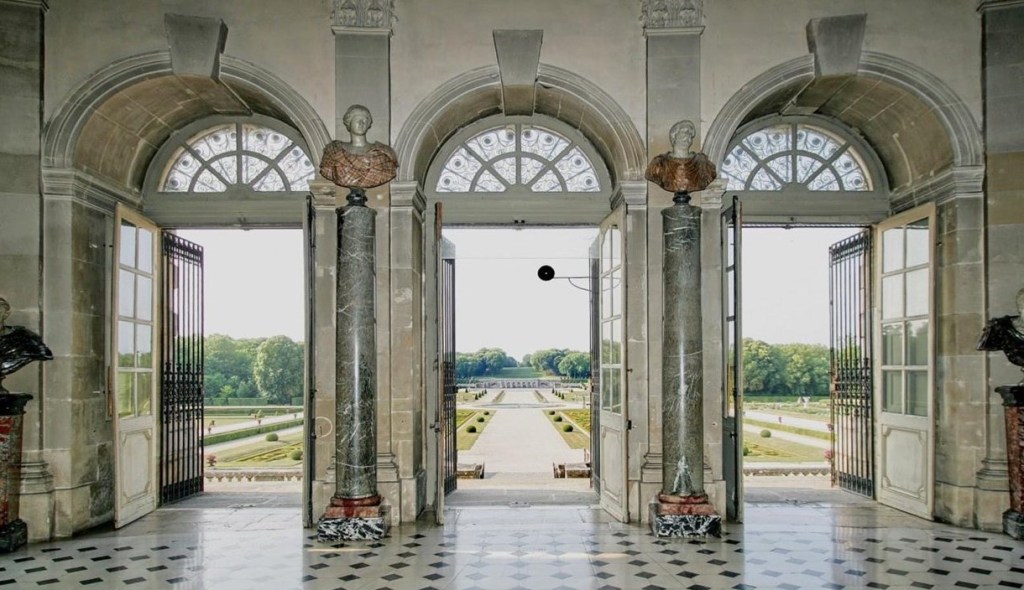
The French gardens were characterized by carefully constructed perspectives that created visual illusions enhancing its size, grandeur and magnificence as indicated in Fig. 07. The grandeur and magnificence of these gardens were desired to exhibit the aristocratic way of life and the absolute power of the monarch. This concept of constructing perspectives was achieved through different garden elements including planting. The French gardens utilized the attributes of plants such as height, colour, texture etc. to construct views exploring the aesthetical qualities of plants and celebrating them.
References:
Turner, Tom. Gardenvisit.com. 04 April 2017.
 Terrain Tapestry
Leave a comment