The Central Park, New York was designed during the mid 19th Century, an era when New York was grappling with congestion and lack of open spaces. At the time, the park site lay on the outskirts, between New York City and Harlem village. Spanning over 340 hectares, the park was designed to meet the future demands of the city. It is noteworthy that the Park has not been designed for one user or one type of user as was prevalent in the European continent during and before the mid 19th Centuries. Instead the park has been designed for the city of New York which had a diverse population with diverse preferences and choice of activities for relaxation.
The park is programmed to function at macro level and at a micro level. At the macro level the park is programmed to meet the demands of the city. The park functions as the lungs of the city creating a refuge away from the chaotic and hustling urban life. It has also played a vital role in creating the urban fabric in the vicinity. At the micro level the park caters to every visitor by providing a palette of different activities.
At the micro-level the park provides for passive and active use. Inspired from the English gardens the park is designed as a sequence of picturesque landscapes allowing the visitor to passively engage with the landscape through the sense of sight. The sequence of landscapes created provides the visitor with innumerable viewing angles. Most of these picturesque landscapes characterized by elements such as water, trees, etc. utilize the ephemeral quality of their elements to create a different passive engagement between the user and the site during different times of the year. This attribute of a picturesque landscape looking different during changing seasons prevents the space from becoming monotonous.
The landscape created around the bow bridge exemplifies the use of ephemeral character of different natural elements to create a varied passive engagement between the user and the park during different seasons. The choice of trees around the bow bridge distinctly exhibits the ephemeral character of its leaves. The leaves bearing the rustic look during fall seem different from the shades of green worn by them during the other seasons. This ephemeral character prevents the space from becoming monotonous and invites the visitor to the space to engage with a different scenic view during different seasons.
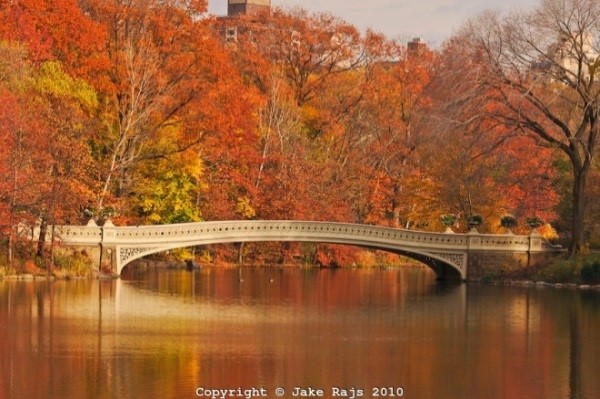
Source: https://upload.wikimedia.org
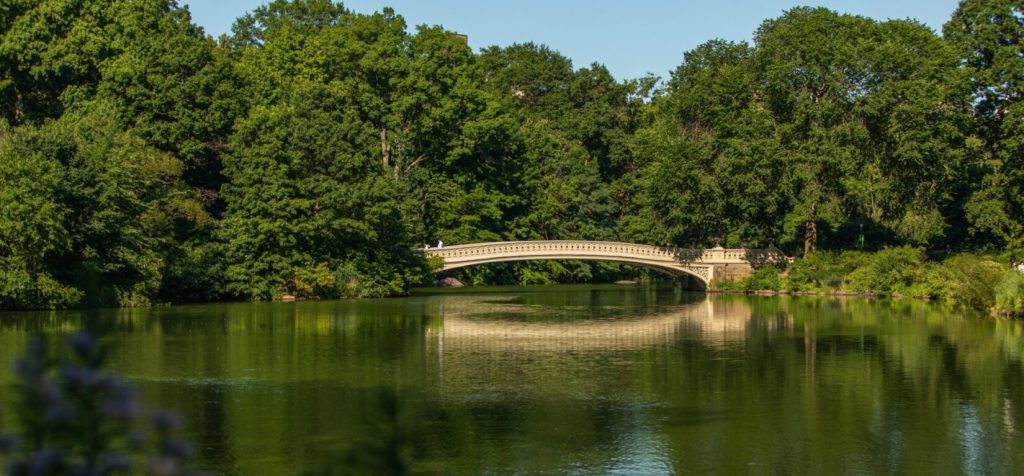
Source: https://www.centralparknyc.org/locations/bow-bridge
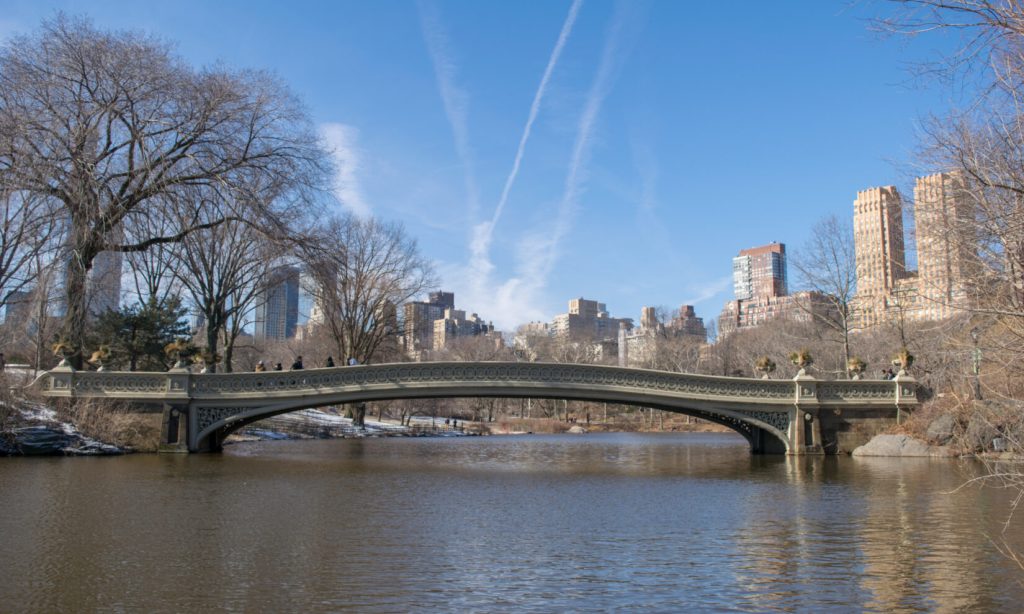
Source: https://www.centralparknyc.org/locations/bow-bridge
Unlike the English gardens which bear a major influence on the Central Park the bridge seen amidst the trees is not just an element for creating a picturesque view but can be accessed and is programmed for connectivity between the two ends of the waterbody.
At the micro level the landscape created is not constrained to passive engagement through sight but also allows for different active uses. The different picturesque landscapes created are programmed for a variety of active uses. For instance, the picturesque scene created by the glaciated rocks are programmed as a space for rock climbing attracting a community of people involved in this activity. ‘The Ramble’ is another example of an engineered natural setting programmed with an active use of bird watching.
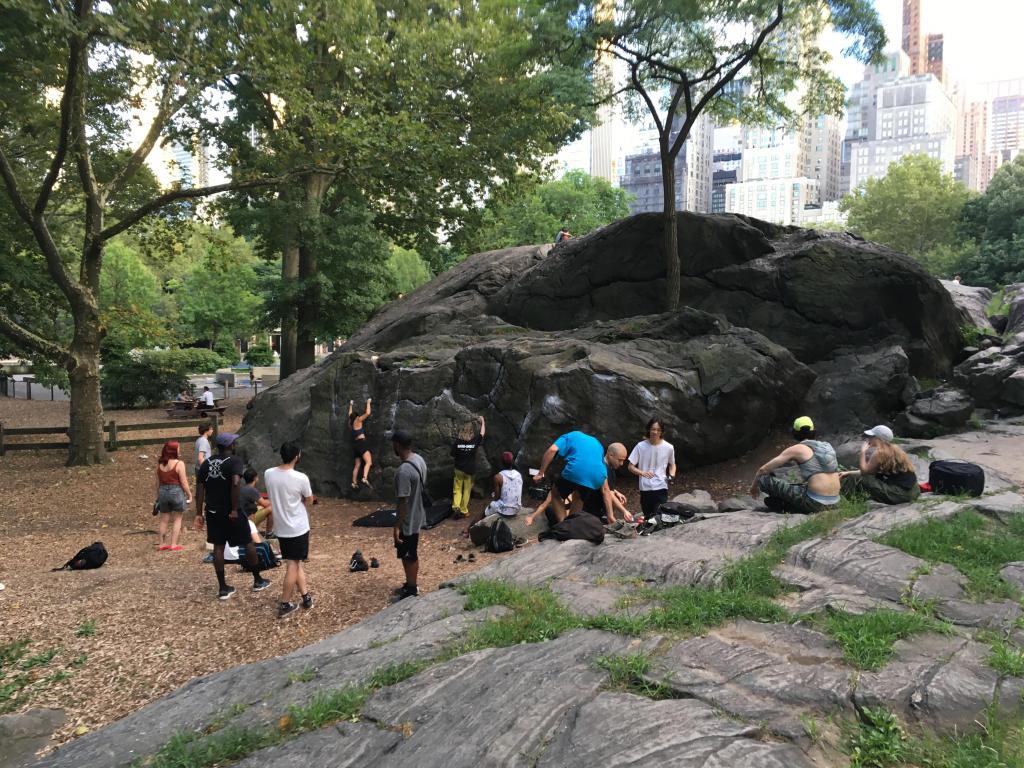
Source: https://www.reddit.com/r/bouldering/comments/wljksq/rat_rock_central_park
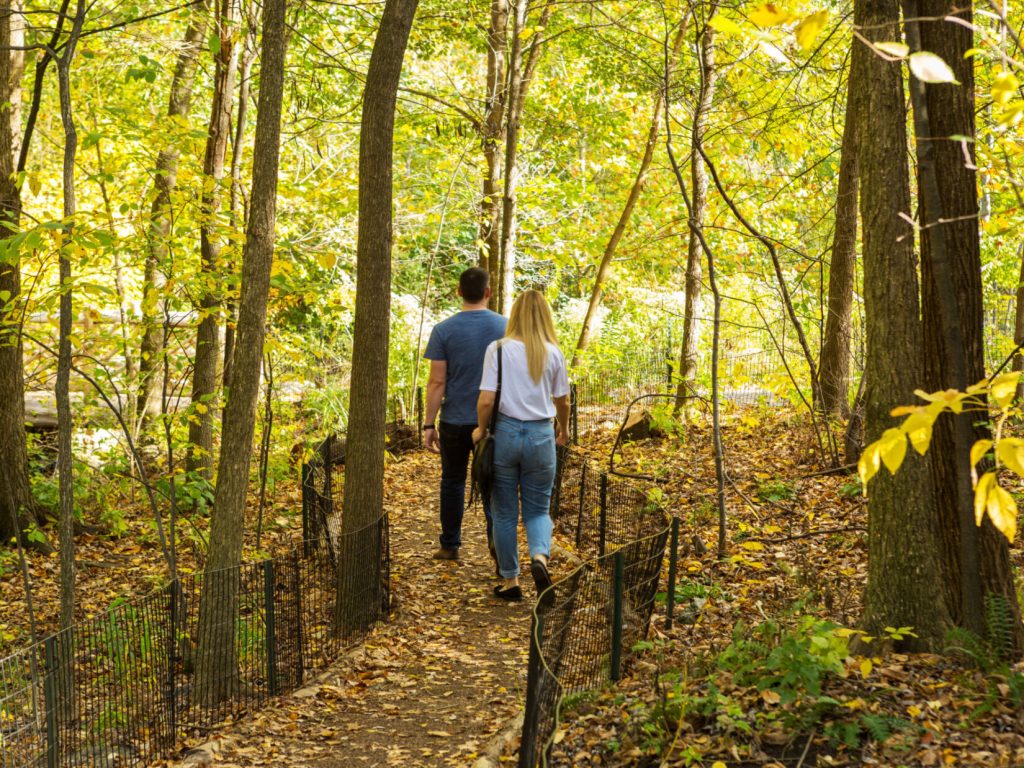
Source: https://www.centralparknyc.org/locations/the-ramble
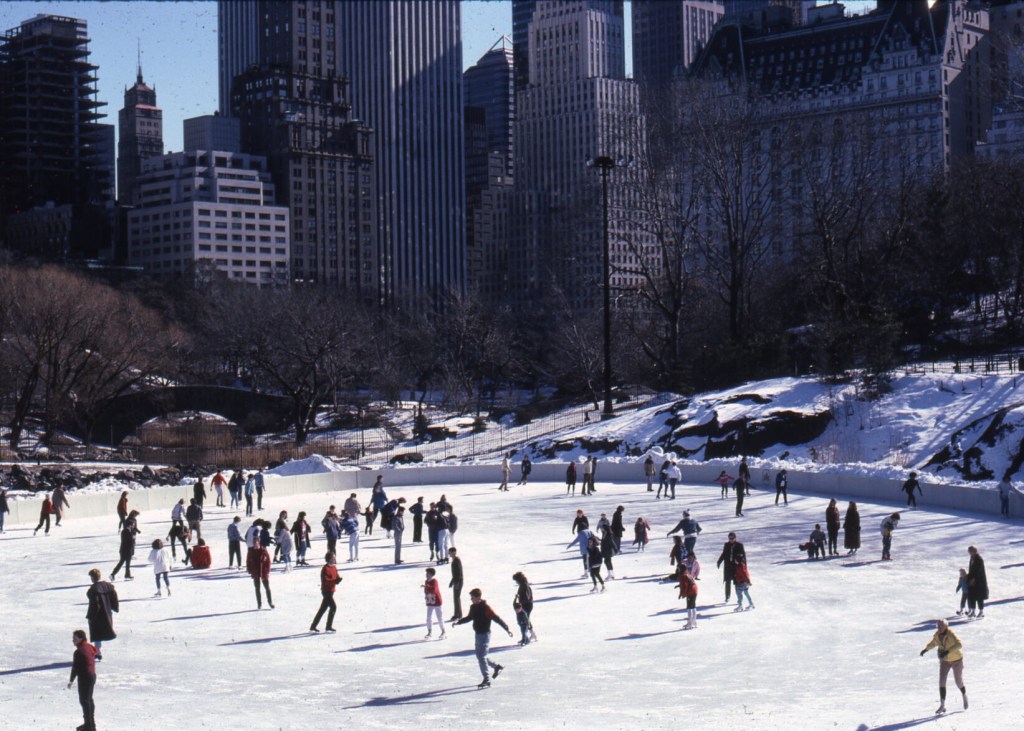
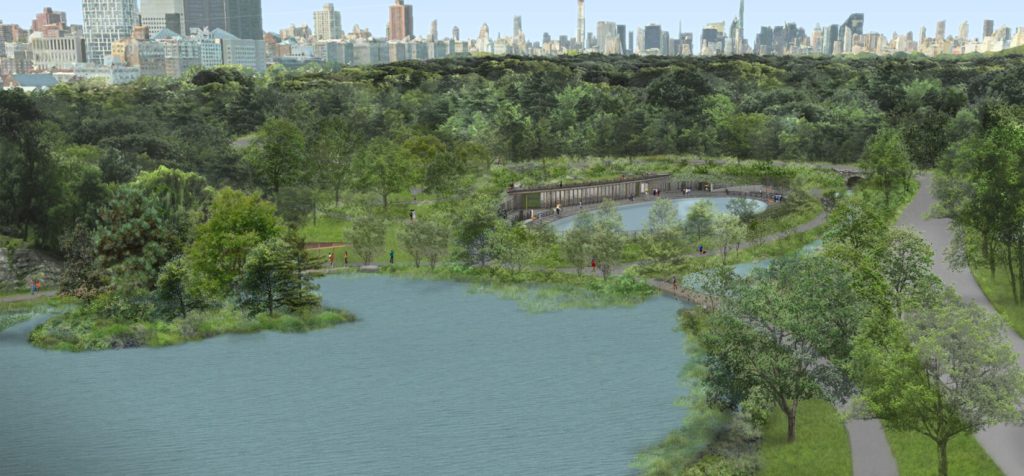
The Wollman rink and the Lasker rink utilize the ephemeral nature of water in creating a multi programmed space. The water in these rinks freezes and forms a sheath of ice during the winter months allowing ice-skating during the cold months. However, as the mercury level rises and summer sets in the ice melts providing for a different use. During summer this space functions as an outdoor swimming pool attracting a different community with a different choice of leisure. The view created by the waterbody also engages the visitor passively through the sense of sight.
Source: https://www.centralparknyc.org/locations/harlem-meer-center
Source: https://www.centralparknyc.org/locations/harlem-meer-center
The English gardens that bear a significant impact on the landscape style of Central Park were created as a sequence of picturesque scenes passively involving the visitor through the sense of sight with limited active involvement as they were designed for a single user or a similar type of community. The Central park designed by Olmstead and Calvert Vaux may bear resemblance to the English style but the genius of the scenes created lies in their programming which caters to a variety of people with diverse preferences of leisure. The architects have aptly utilized the ephemeral character of nature to create spaces defined by multiple programs.
 Terrain Tapestry
Leave a comment